12 Sept 2010

Pressure Points (Part 2)

I've personally had the pleasure/ misfortune of meeting some of those. They treat you as an ally/ friend while you serve the purpose; they probably start not liking you too much when they realise that you are a tough cookie and won't allow them to take privileges over you, abuse your trust, or generally take you for a ride. Soon enough they'll click that you too are ambitious and serious about your job and progression, except you don't need to brag about it to the boss, you have principles, a personality and wit, you are not afraid of defending fairness in the workplace, standing by your own views and opinions, even if this might get you into trouble with a superior. You are loyal to yourself, and loyal to the business, but you don't need to lick boots to prove it.


Then beware the wrath of the ladykiller whose not-so-subtle plan will unveil sooner rather than later: to eradicate the competition (eh, that's you and me!) in order to take centre stage, to ingratiate herself to the boss to the point of following his/ her shadow, to keep you in the dark over the progress of key dossier information in order to trip you up, to casually spread carefully-thought-out false assumptions about you, your method, your work ethics, your choice of screensaver, your favourite chocolate bar etc.

I am not trying to imply that only female co-workers are capable of such callousness; so are male co-workers of course (human nature, eh!). Except with these women, the bullying is probably more premeditated, calculated, scheming, cunning and insidious. If a male colleague is doing the dirty on you, chance is you'll be able to nip it in the bud, confront him, discuss it/ raise your voice over it (if need be), and clear the air. Whereas with female troublemakers, the issue will be more difficult to trace, pinpoint and evidence. I partly blame those feminine lures acting out and hormonal flows fuelling bitchiness: a full catalogue of lies and pretences that includes false airs of innocence, manipulative explanations, moody pauses, pretend surprised looks, strong denials, the odd tear, the wobbly voice, the smarmy expression...


As if life at work wasn't difficult and challenging enough, the most likely enemy of today's working woman will be a younger female vying for the same post/ prospects as her. Without falling into the cliché, this is especially true in fast-moving, image-conscious, youth-orientated disciplines like the media (marketing, advertising, TV, etc.), I.T. and fashion. I have experienced it to a degree, although there is no point in asking the female 'culprits' to come up with their version of the facts as the strong feminine lure machinery would kick off!

Man, I know my worth, but if the boss is easily swayed by a girl ten years my junior, and rates sultry looks and lack of substance over experience, integrity and maturity, then so be it. I know who the loser will be, and it won't be me. 'She' can get the job, after all, if that's what she wants! There is one point in life where the wise amongst us will have reached a level of contentment and self-belief where they will feel comfortable enough in themselves to be able to enjoy their achievements, without a care for what those pesky co-workers think or say about us.


There will come the point where your self-worth will help you give a true meaning to your life regardless of office politics and the trappings of modern life, even if this might mean less money in your pocket (if you consider setting up your own business/ going freelance etc.) but with that oh-so priceless taste of freedom and wisdom in your heart! You see, Mr Neil Young, I'd rather fade away than burn out!

10 Sept 2010

Pressure Points (Part 1)

Throughout our human history, women have faced all sorts of pressures, mainly as home-makers (cook, maid, seamstress, gardener, nurse and jack-of-all-trades), as wives and mothers raising their children. On top of this and increasingly their responsibilities got extended to wage-earners, whereby working long hours on farms, in factories, or as housemaids for the local bourgeoisie or nobility.


In today's Western society, women of working age still face intense pressure to achieve and succeed. On the whole, the challenges are pretty much the same as those of yesteryear, with the same expectations: to aim for/ achieve financial stability/ independence, while at the same time run a home, maintain marital harmony and bring up children. The average modern woman will probably be more career-minded than her elders, due to the fact there is a higher proportion of them gaining a university education and a degree. In the space of the last 20 years, Britain has seen its university student numbers double.

Today's young woman will also probably be more reluctant to compromise. Appearance will be her ultimate vanity, her priority, financed mostly on credit. After childbirth, she'll be happy to get a nanny and go back to the workplace fast, rather than become a stay-at-home mum. She'll also want to have fun with the girls, go out clubbing like a single girl well into her thirties and forties (if not beyond!), while hubby minds the kids - or while hubby goes out too, with his mates.


Not your average cruise: The Sea Cloud

She'll expect holidays, not necessarily the type of holiday her parents would have got her acquainted with as a child (stuck at home for two weeks with a couple of day trips to the seaside, camping down south, or packed off to Butlins or Center Parcs). The young women I know are well-travelled: they will fly off to Vegas, Cozumel or Phuket and these destinations won't even be described as trips of a lifetime! By the way, these are your average girls next door with a degree and an entry office job...

Certain women in the workplace will fight it tooth and nail to get noticed, snatch that promotion and/ or get perks. If jumping on the career bandwaggon means taking advantage of feminine lures, shifting loyalties, taking privileges, being selfish, sneaky and catty, spreading false rumours, incriminating/ walking all over co-workers, and taking undue credit, then my personal observations are proving me just that: some of these women will be ready to do what it takes to advance their career, even if what it takes means anything dubious and morally questionable. (to be continued)

8 Sept 2010

Foregone and Forgotten?

A nostalgic reminiscence of what appears to be the now-forgotten French pastries of my childhood. Although they have disappeared from my environment, if you do happen to spot them when out on your travels, do let me know!

However if these pastries seem to have defected the shelves of the modern pâtisserie shop, I hope that by talking about them I will trigger a mission in others to help me revive their popularity, while at the same time I will be attempting to understand why they simply vanished off the radar in the first place.


L'Etoile (star-shaped cream puff): This one probably stood at the top of my viennoiserie paradise and it held a starry role in my childhood. It was soft, light, fun and uncomplicated, a complete kid-pleaser consisting of fluffy choux pastry shaped into a star the diameter of an adult's hand, and finished with a sprinkle of sucre grélon (thick decorative hailstone-like sugar grains). Why did the stars shoot out of sight and into oblivion? It could be that they were tricky to assemble, easy to tangle or break off, took lots of space on the shelf and didn't fit nicely in a standard paper bag... In the 1980s, they gradually got replaced with the chouquettes (an adult version of the star, according to I, same recipe but without the fun and shape!). The chouquette, a northern speciality, literally means 'petit choux', a miniature choux, sprinkled with grélon sugar.

Le Cornet à la Crème (cream cornetto): I saw this filling viennoiserie as a winter ice cream, available from bakeries mainly. It was made up of rolled puff pastry shaped into a cornetto and filled to the brim with set crème pâtissière. The cornets for sale were handily propped inside a deep flutted brioche tin on the bakery counter. Once I'd bought my cornet, I would eat it the same way I would an cornetto ice cream, for that ultimate pretence! So then, what happened to the cornets of this world? I presume they were made in the first place using a surplus of pastry and cream. Maybe bakers and pâtissiers learnt to be more efficient with their usage and stocks, and the need for those pâtisseries just died out as a result... Or maybe it is a bit more complicated than that.

Le Gland (acorn-shaped cream cake): I remember my grandma treating me to those pretty and incredibly morish pastries. As a child, they were tricky to eat and potentially messy. Those slightly flattened acorn-shaped choux were filled with crème pâtissière (flavoured with a hint of kirsch), and topped with a pistachio-coloured sugar icing and a sprinkle of dark chocolate flakes at the narrow end of the acorn. Although still on the scene today (but less represented nationwide), the gland has encountered competition in the form of other figurines (cute little pig or the green fig in Corsica) which are coated in almond paste (as opposed to sugar icing)...

Le Cygne (praline custard-filled swan-shaped cream puff): If you loved Paris-Brest gâteau (pictured below), but couldn't justify the expense or the size, then your individual portion of Paris-Brest did the trick impeccably: choux pastry (a recurrent theme it seems in our article!) packaged into the shape of a swan - no less - with a delicate filling of praline-flavoured whipped cream, for that moment of indulgence a child could not resist: 'Mum, I promise I'll tidy my room!' The tiny Pâtisserie Courtaux, at the bottom of la rue de Paris, made the best cygnes I could wish for. Since, the swans seem to have defected to sunnier climates after the pâtissier retired. The only Paris-Brests I can source these days are either in their original ring-shaped format or miniature version... The swans were probably too fiddly and fragile to make it into the 21st century...


La crème de la crème: Paris-Brest gâteau

And for good measure, I'll dedicate this last one to my mum who regrets the fact it has been pimped up and replaced by a bunch of colourful impostors:

Le Macaron (macaroon): So no, I won't be praising those scarily perfectly-formed coloured designer fixtures of the pâtisserie scene that play tricks on the colour-blind. The ones my mum is on about were bigger in size, more consistent, and simply white. No naff flavours, no food colourings, just a simple macaron. So simple, a clever soul had to alter it to turn it into a bit of a parody, let's be honest... But the pay-out for the guy has been formidable and he has laughed all the way to the bank ever since!

4 Sept 2010

American Bubble-Gum

Brownies, donuts, cookies and muffins... These are words that need no description, no explanation and no translation (they are untranslated, and maybe even untranslatable). Taking France as an example, those words have invaded our dictionaries and vocabulary like in their day 'jerrycan', 'week-end', 'chewing-gum', 'rock 'n' roll', hamburger and other terms of welcome (or imposed) American endearment. They are understood by most of us, maybe bar the centenarian living in seclusion in a remote village. Brownies, donuts, cookies and muffins have advanced onto our shores with ease but has this advancement brought progress to mankind? I wonder...


Creeping up our bakery counters, gaining column inches in food magazines, chosen by the cool-on-the-go, these cakes have won an incredible battle pit against France's honed, skilled  and world-reputed pâtisserie tradition, a battle of easy over fiddly, plain over tasty, fast over slow, filling over fancy, cheap over less cheap, a battle of taste, a battle of texture, a battle of colour. This battle of grub, of stodge, against delicacy was no charm offensive and I don't think it was ever meant to be.

Despite the fact that there is more to American specialities than Brownies & Co., the latter have succeeded in ramming Americana further down our throats. They are another example of what I call 'American bubble-gum', a cultural model that promotes a vision based on mass-consumerism (and this is not simply related to food), levelled expectations, levelled taste leading to its aseptisation, itself leading inexorably to loss of taste. And the loss of taste gives credence to a taste for insipidity.


Chocolate Mini Sparkle Doughnut by Starbucks: vector of propaganda?

I deplore the levelling of traditional French pâtisserie values to the so-called mass-market appeal, based on the promotion of universal uniformity and mediocrity of taste and experience to an audience of un-afficionados. By un-afficionados, I mean those French people and foreign visitors alike who do not seek, either out of choice or ignorance, the appreciation or savoir faire behind our expertly-skilled pastries, which are an integral part of our heritage at large. And through this we all are the (un-)willing witnesses to the levelling process of cultural difference.

This erosion of cultural difference is reflected further with mass-tourism. Instead of satisfying one's curiosity and embracing cultural difference, mass-market tourism will seek false reassurances by encouraging the readily availability of fast-food products that are familiar to all (beyond our American pâtisserie theme, but fully endorsed by the American food model), from pizza to kebab, from burger to pannini, from brownie to cookie, a commonly understood culinary language ('culinary' being an exaggeration). This levelling, led by the American model itself, threatens to enlist irrevocably our European youth (and their parents) who seem either happy to embrace it, indifferent about it, or resigned to accept it... I have chosen to raise my voice about the whole thing, and so be it if I have offended some of my readers. Please, I am no anti-American, but that doesn't mean I am ready to accept (and swallow) anything America throws at me.


Brownies au Chocolat Blanc et Noix de Macadamia by Elle à Table
P.S: I haven't mentioned the much-lauded cupcakes in this article on purpose. Because - in contrast with brownies, donuts, cookies and muffins - their elaborate colourful presentation demonstrates a certain amount of skill and talent, although the basis for the cupcake itself remains plain and easy. Cupcakes are 'couture cakes', as I like to describe them. The secret to their success lies in the decorative expertise of the cook/ baker, resulting in an individual, even unique style. Therefore for these reasons, I would put the cupcake in a higher league to that of Brownies & Co.

1 Sept 2010

Happy First Anniversary!

01/09/2009 - 01/09/2010: One blog, one writer, two countries, 83 posts, one Jack Russell Terrier mascot, and limitless inspiration!

La Baguette Magique is celebrating its first anniversary today! It has come a long way since the collection of homelife-dedicated writings which I started in July 2009 after watching an inspirational Martha Stewart biopic (Martha, Inc.). I then collated the articles into a handy blog format, as per my partner's suggestion, and the blog grew organically from there to over 80 posts to date!


Source: Piped-Rose Cupcakes by Martha Stewart
The topics I was passionate about soon enough transcended homely food and entertaining, to embrace lifestyle at large, shopping and retail, fashion trends, design, pets, ecology, travel, and inner thoughts.

Alongside copywriting, I have dedicated countless fun hours to researching ideas and improving on what would essentially be a 'labour of love in progress' (look, no work connotations!): the brand identity with its slight retro feel, the HTML tweaks and turns, the photography (another hobby of mine) that I would then elaborate upon with props, settings, and the photographer's innate untold message.

With La Baguette, there I was (am): simply myself. Never pretending to be some superwoman I am not, never fooling my readers with tales of extravagant lifestyles (there are better-qualified bloggers out there for this!). You see, my mission is simple: to write about what I know best, what makes me tick, let the narrative unfold, the words create the *magique*, let the poetry permeate this tiny corner of the net, make you - the reader - stop by and linger some more. This blog is an indulgence: I please myself and I hope I please you too.


Since I started putting pen to paper as a young child, I have never stopped writing: letters, poems, songs, fairytales, unrequited love stories, travel logs, philosophical essays, slightly unhinged Ray Carver-inspired short stories, rock n' roll/ silver screen cartoon biopics, a 200-page dissertation in my final year at University, countless project/ research papers for work, marketing material, advertising copy...

Writing has always been second nature to me. I may be a woman of few words in a social situation, but I am no less an acute social observer, a thinker (an analyst even!), a writer and - I would love to think - a wordsmith who loves words.

As La Baguette is looking forward to the next year milestone, I thank all my readers for your following. There are many reasons to rejoice together, including the fact that in the face of adversity, La Baguette has provided me anchorage and focus to persevere. It has also given me clout and a sense of testimony within the blogosphere and the world of online publishing in general. I hope it has delivered to you what you were looking for in a blog, in terms of contents, information, tone and visuals. As always your comments and suggestions are most welcome!


On another note, some great news I would like to share with you: the design blog project which I mentioned to you last year in A Taste for Design is still taking shape, despite being sadly delayed. I have been working on its contents and, although I am unable at this stage to advise you of when it will go live, I promise it won't be 'just another design blog'... Stay put for now on the design front, we are on our way with the goods!

In the meantime, corks out and bottoms up for La Baguette Magique's first year, this is one beautiful achievement indeed!

31 Aug 2010

City Fizz

For the first time in 16 years, I have been away from England for longer than 4 weeks on the trot. Actually by the time I went back to Albion slightly over a week ago, it had been 8 months since I was there last: a record! Besides this was only going to be a flying visit, three days crammed-full with appointments involving flights, taxis, trains, coaches and buses, not exactly a leisurely city break where you can take the sights in, play tourists and treat yourself.


I invited my brother to come along, as my travelling companion. I think I needed a human anchor, some sort of moral support, as I felt somehow daunted by the prospect of facing full-on city life after 8 months of island recluse life, beached on the shore of a tiny village an hour's drive away from the nearest town.

My brother hadn't been in Manchester since January 2002, therefore as a land planning/ architecture enthusiast, I was looking forward to his input about the city centre remodel. He was anticipating change but not the kind of change he witnessed: a whirlwind vertical architectural challenge deployed at full-throttle between the odd preserved historical landmark, a supposedly concerted vision of new Manchester that flirted with controversy as it transcended into a chaotic mish-mash of proportions, style, materials and substance. Already you can't help but forge an idea about which of those new structures will make it to the next 50 years, and which will start a slow descent into demolition before the end of the next decade...


Also a flying visit to Liverpool!
Some of those projects weren't completed by the time I left Manchester in December 2009, for instance Spinningfields, yet with more of the same in the offing than elsewhere in town (or elsewhere in Blighty for that matter): ample office space (with supply expected to overtake demand), chain bars, Prêt-à-Mangers and branded coffee branches, Tesco and Sainsbury's in their mini or midi formats...

Meanwhile Piccadilly Gardens looked different too, even to I. The groundfloor to One Piccadilly Gardens, home to Bank of New York (BNY Mellon), now promotes café culture with the likes of Kro Bar, as an extension to existing offerings from Caffè Nero & Co. The once desolate concreted square ('gardens' remaining an overstatement) has now turned into an invitation to somewhat linger rather than dash past.

Elsewhere, a construction site opposite Victoria Station reveals that Chethams School of Music has surprisingly embraced modernity and, in a 'tabula rasa' exercise, is having state-of-the-art premises constructed. But in our speedy tour of town, my brother and I surprised ourselves by deciding that the best store refit was the once unloved/ despised Arndale Centre: gone are the 1970s yellow toilet brick cladding, dingy lighting and claustrophobic ambience, and in are the natural light wells, airy walkways, quality white tiling and revisited shop spaces that make the Arndale compete with the Trafford Centre in terms of style and kerb appeal, an aberration of thought prior to the refit!


At the side of City Inn Hotel where we were staying, we discovered a pedestrian gateway that conveniently links the Gay Village (pictured above)/ South Piccadilly Gardens area as a streamline shortcut to Piccadilly Train Station, with (yet again) brand-new office blocks thrown in the redevelopment (one housing the GMPTE*).

I have to admit that over the last 5 years or so, I haven't been a regular Manchester city centre visitor, hence the fact that many of the (un)/fortunate brand-new property developments had slipped off my radar, and I was indeed always in for a surprise when I did go into town, losing my way, trying to remember what the previous building looked like, searching for clues, bemoaning those soul-less unloved buy-to-rent apartment blocks, with dubious architectural merit, that relentlessly sprang like unsightly cold sores, cages of metal hastily clad in glass or faux-brick (thinking of the residential tower-block on New Bridge Street). A couple of years ago, I remember counting no less than 12 construction site cranes in the skyline along the M.E.N. Arena-Trinity Way-Mancunian Way!


The June 1996 IRA bombing propelled - so to speak - Manchester city centre into a building site that went far beyond the impact of the bomb damage, into an era of fervent deconstruction/ construction/ reconstruction that still continues today, 13 years later. The city centre has changed beyond recognition. Love it or loathe it, it is nonetheless a fascinating transformation, albeit ruthless in places, but this is only history repeated, despite the fact that our architect luminaries and City Council chiefs pledged not to repeat the architectural mistakes of their post-WWII forefathers. Who are we to blame because after all nobody's perfect and 'errare humanum est' (error is human!). And in the same breath we are told that someone's junk is someone else's treasure... A modernist's excuse?

*GMPTE = Greater Manchester Public Transport Executive
Further reading: Why not check out my reader contribution to a Manchester property development piece published by G7UK (September 2008).

30 Aug 2010

Soft Amaretto Macaroons

For a dozen macaroons
Preparation: 10 mins
Cooking: 20 mins
Refrigeration: 3 hrs


Introducing the perfect accompaniement to our Caramel Cream Coffee Cups recipe, in terms of taste and texture first and foremost, and also so as to make use of the 4 egg whites from our Coffee Cups. This is how I came to improvise those macaroons.


Yes you got it, I had to play a bit of a rescue mission to save my Caramel Cream at the time, hence the extra egg yolk I had to add to the cream (which left me with a total of 4 egg whites, used here). However if you have been good with your Caramel Creams and only needed 3 yolks, you'll still need 4 whites for the macaroons (that is if you are aiming for 12 pieces).
  • 4 egg whites
  • 4 tablespoons caster sugar
  • 4 tablespoons ground almond
  • 1 tablespoon flour
  • Splosh of Amaretto liqueur (i.e. 1 tablespoon worth)
  • Cooking oil for greasing
  • Cocoa powder for dusting
Pre-heat the oven to 100°C.

Whisk the egg whites together until firm, preferably using an electric whisk. Add the sugar, ground almond and flour and whisk again with the electric whisk until you obtain a fluffed-up mix. Add the splosh of Amaretto liqueur and whisk some more before carefully spooning into a greased biscuit/ mini-muffin silicone mould, or a greased metal biscuit/ mini-muffin tin. Optionally line each hole with a paper case in order to ease the macaroons out  when cooked (more than for cosmetic reasons).


Place the mould in the higher part of the oven and leave to gently cook for 20 mins. The macaroons will remain pale throughout, but do stick a knife through the centre of one in order to check they are ready to be taken out of the oven.


Leave to cool 5 minutes, then carefully remove from the tin one at a time. Leave to cool further on a baking grid to get rid of any trapped moisture, before placing the macaroons on a plate in the fridge for as long as the Caramel Cream Coffee Cups. The refrigeration will help the macaroons harden slightly, which is the consistency we are aiming for: soft and almost chewy, but holding their shape.

Easy does it, you're all done! Just before serving, dust with cocoa powder to give the delicate macaroon pallor a hush of colour.

19 Aug 2010

Home Truths About What We Call a Home (Part 2)

Exporting home out of the home: I remember one of Jo Malone's beautiful product catalogues from a decade ago that provided some insight into the skincare specialist's definition of 'feeling at home'. It said something like: 'When I travel, I like to surround myself with things that I enjoy at home, like a (Jo Malone) fragranced candle.'


Basically this means that you can recreate the home away from home, during a hotel stay, for instance, with some key-pieces that are meaningful to you and your well-being, and that will help you to unwind while reminding you of home. For some it might be a candle, for others it might be an endearing alarm clock, a room spray, a loved photograph or a favourite book...

As a child at night I would never part from a piece of eiderdown from my baby days, that gradually turned ragged but that I would take anywhere on my sleep-overs. It was reassuring, protecting, terribly soft, a reminder of home and it magically sent me to sleep as a result (like some tactile lullaby!). Many an adult has a similar story involving a teddy bear, a doll or, like I, a humble piece of textile!

Your house, not (necessarily) my home: Living at someone's house means that freedom of choice and expression of personality are toned down, even suppressed. Communal living implies the fact that you have to abide by a set of rules. Even in the most laid-back commune, you will still have the odd rule to stick by.


Back at my parents, meal times are organised around their lives, which is completely acceptable of course but which may not always be suitable to me. Their life is organised into a well-rehearsed routine compared to mine back in England, and I've had to adapt my way of living in adequation to theirs, not necessarily to my liking but what can you do?

Back in England, I have no contact with those old annoying family friends, whereas here avoiding them is unavoidable at times... Compromises mean that you, the visitor/ guest (the intruder) lose your way a bit. You end up living a lie by pretending you (dis)like such-and-such singer/ politician/ design school/ fashion trend, in order to avoid family discord.


If 'home is where the heart is' this surely excludes places where you cannot be yourself, where things are done half-heartedly (cooking for the family is a good example in my case) in fear of the food critics that I am cooking for, where my original aim to show appreciation for their hospitality gets abnegated for a question of too little salt or too many raisins...But no matter what, home will always remain:

A pretty four-letter word: Full of promise, expectation and anticipation ('I want to go home!', 'I want to be home for Christmas...'), immortalised by stars of the silver screen (Think E.T.!) and other popular modern icons. Home is simply that final destination: a place of solace, a safety valve, an anchor point that helps you to charge up your batteries before facing the world again!

So there it is, the truth has hit home! Home is simply a beautiful place to be.

18 Aug 2010

Home Truths About What We Call a Home (Part 1)

A few home truths borne out of popular belief shape up the concept that we hone about the home, starting with the famous saying: 'An Englishman's home is his castle', emphasising the sacred character of our home, whether we live in a humble shack or a palatial estate, whether we rent it or buy it, whether it is a family inheritance or a brand new build, whether it represents us or is more impersonal.


This thought process started with the fact that I am currently, so to speak, living out of a suitcase, or more accurately at my parents' home. I am typing away on my brother's computer, sat on an uncomfortable 1930s chair in a crowded study that looks more like an attic, surrounded by things that are not mine in a house that doesn't represent me and with which my affinities are pretty limited. Although I am surrounded by loved ones and have my own room, space is restricted and cluttered with junk that is not my own. As harsh as that may sound, that house is not my home. And actually, come to think of it, it might not even be my parents' own home either as they have recently moved in, have had to compromise with some of the house aspects, and are still finding their feet. So then, what do people need for a house to feel like a home?


Make a House a Home (title borrowed from the eponymous TV make-over programme): A home is first of all a place where you can gather your thoughts, get some head space, organise your ideas and feel at ease and at peace with yourself. It is not just a physical shelter from the immediate elements of meteorological weather and other exterior threats, it is also an emotional one. It is a place where you unwind, you relax, you take stock of your day/ your week/ your life. You do your own thing unperturbed, you potter about without having to explain why you are doing what you're doing (unless you share your home with an awkward companion!). Home is where you feel comfortable, where you can slouch in your PJs at stupid o'clock in the afternoon with no-one to judge you about it. Home is where the heart is.


Home gives you a certain degree of freedom and room for manoeuvre. You personalise it your way, ideally surrounding yourself with objects that inspire you and/ or make you happy. If you are happy in your head, within you, then you'll find that you are happy in your home. You grow with your home, let's say from your romantic chintzy phase to a contemporary loft theme. Your home is a reflection of you and an extension of your personality to some degree, be it through your tidiness levels, style and ambience achieved, choice of artefacts, room lay-out, etc. Homeliness seems to be the secret ingredient that will help turn any type of dwelling into a home.

However the connection you have with the concept of home will not necessarily be linked to owning or renting the place. I have visited or stayed in houses that were so inviting in terms of design, style and welcome, that they made me feel at home virtually instantly. Even a good old pub can be homely, through its atmosphere and liveliness, friendly staff, its décor, a roaring fire or a pretty beer garden; all these factors that are going to entice you in, invite you to buy a drink and linger over it, enjoy your time, and come back again to relive the experience. Boutique hotels have cleverly capitalised on that very idea of homeliness as part of their marketing strategy to help differentiate themselves from the mass hotel market. (to be continued)

16 Aug 2010

In Concrete Terms (Part 2)

Corsica's most populated/ popular areas are in danger of becoming an extension to the Provence-Côte d'Azur sprawl: South Bastia (Furiani, Biguglia, Borgo, Lucciana), Costa Verde-Porto Vecchio, Calvi-Lumio, Ajaccio-Propriano, with the frenzy now reaching inland (Corte, Vescovato) and the more exclusive places of interest (Palombaggia, Rondinaria, Sperone).


Les Rivages de Calvi, advertised in local newspaper Corse-Matin (31/08/2010)
And with it, the sprawl mentality: a little slice of suburb in the sun, with or without a view, offering the trappings of urban comforts, plastic fantastic at heart, with no regard for/ no integration into the countryside or the countryside way of life. Instead those recent builds keep nature at arms length, concreted, fenced in, uninspiringly hedged with laburnum, privit or leylandi, or hastily walled by rows of breeze blocks. All alone in the world yet surrounded by it, individualists in search of the crowds who are the indirect accomplices of those greedy promoters and developers... For that little slice of suburb in the sun!

North of Bastia, property fever is also creeping in, along the Eastern Coast of the Cape, although the area has resisted pretty well compared to other parts of Corsica. Here and there we can't help but notice the residential carbuncle that, instead of morphing into the maquis, shows off its massive supporting walls and garrish/ flamboyant footballers' wives architecture from its unmissable vantage point (a parallel to those garrish Californian mountain-top villas that spoil the view and brag the brash!).

I also believe that some hillside apartment schemes (ex: in Santa Severa, pictured below) are equally at odds with the surrounding environment, while others (Les Jardins d'Erbalunga) have been keener to compromise by adhering to a more classic architectural style, using stone building materials, keeping to a low-rise format and tucking most of the development out of sight. Of course these little added luxuries come at a price for the buyer.


I am aware that there is a tangible need for housing, that tourism plays a crucial part in the island's economy (and necessitates adequate hotel, rental, leisure and transport infrastructures) and that we cannot turn back the clock (by pretending we are living in some museum!). However real estate must get real and make it more sustainable, by avoiding human concentration and sprawl polarisation. Members from regional and local governments must remain impartial and resist loopholes, abuse of power and personal gratifications that allow for illegal construction schemes to be erected with impunity. Also they must be provided with enough back-up from the State to help inland villages revitalise and fight desertification and for old/ derelict properties to benefit from incentivised subsidies towards renovation and modernisation.

By the way, Corsica has a fabulous built patrimoine (heritage) that is in acute need of a cash injection in order to preserve it and save it from that landslide slip into public oblivion. Heritage is not solely limited to housing, I am thinking about public, historical and religious buildings too. Within a 5-mile radius from where I live, I can easily think of at least 10 of such infrastructures in urgent need of a concerted intervention...


Source: Prints & Fine Arts (Roger Broders poster print)
You see, everyone seems to want the bright lights and the sea view yet not everyone is going to get them! The future of the island, the region, and the South of France as a whole is not going to be in the spreading sprawl. It is going to be in diversity of choice and offering. And in personal goodwill in favour of nature and future generations, i.e. without a selfish urge for that little slice of suburb in the sun!

15 Aug 2010

In Concrete Terms (Part 1)

Foreword: I am not interested in taking sides with who-did-what-when-where-for-how-much. I am trying to act on nature's behalf and ultimately in everybody's interest - in the long term. I am not affiliated to a party or a group in any way, shape or form. I am only a nature lover in fear of out-of-control builds. I also happen to have spent 99% of my life in towns and cities and know how alienating they can become and how important it is therefore to preserve our natural environment...


Corsica vs. the great property debate... Countless official and non-official publications have exhausted the topic and politicians have relished it as their pro-or-con battleground. Economists, business analysts, media commentators, university lecturers, pillars of the local community and good old Joe Public have all expressed opinions, pointed the finger and done the maths.

Stories regularly abound in the local press about the greed and excesses of unscrupulous promoters and developers alike who are acutely aware that they have reached France's very last frontier of unspoilt spaces (last few remaining!), an Eldorado within reach that they are ready to take full-on for that last megabucks finale! Hear-say tells us that elected members of certain local authorities have eased up the legalities, under duress or willingly, to enable property development on their territory. Certain government-appointed officials seem to have reinterpreted the law in favour of property schemes, while local environmental lobbies are literally fighting a losing battle, but their determination has set a precedent by helping to delay a property boom that could potentially ruin Corsica's natural assets.


Meanwhile, as a thin silver lining orbing the black cloud of greed and corruption, Conservatoire du Littoral, a governmental environment agency, favours a softly-softly approach, trying to conciliate ecology, economy, eco-tourism and sustained development; so far 18,000 hectares of land in Corsica have been placed under the Conservatoire's authority, with a pledge to preserve the natural habitats under its management against (further) human degradations.

Experts reckon that in terms of property boom, Corsica is 10 to 15 years behind the Côte d'Azur, which in itself is particularly worrying as it indicates only a small time gap (smaller than I believed it to be). A drive down the French Riviera and satellite megalopolises will give you an idea of the extent of the spread! At night from sea, you can't help but notice a concentrated constellation of lights - like a bad bout of eczema - along the coastline. An almost uninterrupted sprawl links towns and cities, and you end up losing track of where you are.


Travelling down South late one evening, and stopping over at a hotel we had randomly spotted off the motorway, we had no idea where we had landed. If there were any signage, it was confusing. Even the hotel's literature couldn't quite convince us as to where exactly we were. It turned out we had reached Aix-en-Provence, but it all seemed a blur. No landmark, no place of interest, not a sign of historical value that would give us a reassuring hint. We had landed in a residential sprawl, a sprawl too many, made up of housing estates laid out in a crazy paving sort of design, interspersed with the ubiquitous soul-less shopping parks that drain life out of city centres to inject it artificially into those outstretched suburbs, and all interlinked together by a confusing network of ring roads, 'A' roads and bridges.


The next day, looking for a petrol station in the neigbourhood, we appreciated the extent of that extended suburb, with its mish-mash of styles, tiered constructions and conflicting planning policies. It wasn't difficult to make out that only 10 years ago or so the countryside (urban countryside) had flourished where we were now standing, and across the road that wide tower-block coming off the ground was going to be the latest man-made barrier between the green mountain on the horizon and the sea of bitumen and concrete where we were stood... (to be continued)

10 Aug 2010

Caramel Cream Coffee Cups

Serves 5
Preparation: 20 mins
Cooking: 20 mins
Refrigeration: 3 hrs


It was never meant to be a pale assortment of creams and biscuits... I started off randomly picking the Caramel & Butter Mousse recipe from my mum's hundreds of magazine cuttings, for a number of simple reasons. First here was a mousse that was original: no chocolate involved! Then the coordination between caramel and butter sounded like an instant hit to me. Other brownie points: I had all the ingredients handy, and the prospect of a quick, easy and foolproof dessert (no rehearsal required!) was a must for that lazy Sunday lunch. Minimum fuss, minimum washing-up, maximum benefits, so why would I pass the chance? I'm sure you have gathered by now that I am no kitchen kamikaze!


Yet little did I know on that fateful day that I would end up rewriting the recipe completely after it started going wrong. Then the Mad Hatter's tea party theme from Alice in Wonderland developed from there. And that's how the originally planned Caramel & Butter Mousse metamorphosed into a rich fluffy cream with a hint of caramel... While I was at it, I also improvised some macaroons, which I fragranced with a splosh of Amaretto liqueur. Why? Because I could, and this was no kids party anyway!

For this dessert, I used agar-agar powder, a natural vegetable agent found in health shops, reputed for having 6 times the setting properties of traditional beef gelatine.
  • 1g agar-agar powder (vegetable gelling agent) or 6g sheet gelatine
  • 200g caster sugar (or, better still, its equivalent weight in sugar cubes)
  • 6 tablespoons cold water
  • 75cl double cream
  • 25g unsalted butter
  • 3 egg yolks, beaten
  • Pinch of salt (optional if using salted butter)
  • 5 teaspoons of pralin (crushed caramelised nuts otherwise known as pralines in France) + for sprinkling; or crushed amaretti biscuits
Place a plastic/ metal mixing bowl and the whisks of your electric whisk inside the freezer. If using gelatine, place it in a bowl of cold water.


Meanwhile put the sugar in a small saucepan and add 3 tablespoons of water. Heat up carefully until you eventually obtain a golden caramel, adding 3 more tablespoons of water as you go along (i.e. as the sugar starts sticking to the sides of the pan). Away from the heat, gradually add a third of the double cream, the butter and salt, and blend quickly together, ensuring proper dissolution of the caramel. Be sure to place the remainder of the double cream back in the fridge as you need it to be extra cold for later.

Still away from the heat, add the beaten egg yolks to the caramel sauce while whisking together. Be careful not to add the yolks with the pan heating up on the stove, as you could risk scrambling the yolks (if this did happen though, rescue the sauce by filtering it altogether, using a fine sieve, and then add another beaten yolk at the end of the process to compensate for any wastage).


Put the pan back on the heat to make the caramel sauce thicken for a couple of minutes. During this process, add the agar-agar (or gelatine - after pressing it carefully to remove excess water) while whisking constantly to ensure it doesn't reach boiling point. 

Then while you are leaving the caramel sauce to cool down, take the mixing bowl and whisks out of the freezer. Ensuring the remaining double cream is really cold, whip it up with the electric whisk until it becomes firm. Incorporate the whipped cream carefully and gradually to the sauce, swirling the two together. Scoop into fancy coffee cups, at the bottom of which you will have placed a teaspoon of pralin (or crushed amaretti biscuits). Refrigerate for a good 3 hours.


When ready to serve, sprinkle more pralin over the set creams (or finely dust with cocoa), and serve with my Soft Amaretto Macaroons, using the egg whites from this recipe. Or use the whites into meringues, flavoured with coffee extract, which you will crumble on top of the creams.

8 Aug 2010

Corsican Gastronomy - On the Menu (Part 2)

Pastaciutta: Pasta in a pot, but no Pot Noodles in sight! Barilla spagghetti cooked al dente, fresh tomato sauce made from scratch and livened up with garlic, bay leaf and wild marjoram picked on the day, strips of Corsican pancetta and Corsican smoked ham, all tossed together in mémé's loyal Le Creuset cast iron pot. A simple recipe, but only my grandma could get the proportions right and that resulting unmissable taste.


Ratatouille Corse: Here is one dish that the average cook thinks they can make, but that a series of shortcuts and misinformation will result in a pastiche. Ratatouille shouldn't be that soggy, bland boiled veg affair we have been made to accept as truth. It should be made in a deep heavy frying pan (not a saucepan and please no lids on as the aim is not to sweat the veg!), you should use olive oil (forget the other types), and be generous with it (veg should be coated). Plenty of seasoning and no skipping the garlic and marjoram (the latter tied up as twigs into a bouquet garni).

As for the veg used in the Corsican ratatouille, there's only two (therefore put those courgettes, peppers and onions back in the fridge): fresh tomatoes and aubergine, peeled. Now for the demystification: no matter the advice from the TV chefs, I would recommend that you still saturate the strips of peeled aubergine in good old sea salt for a good hour, before pressing them (mémé used to wring them out like they were drenched cloths) to extract every last bit of juice and bitterness.


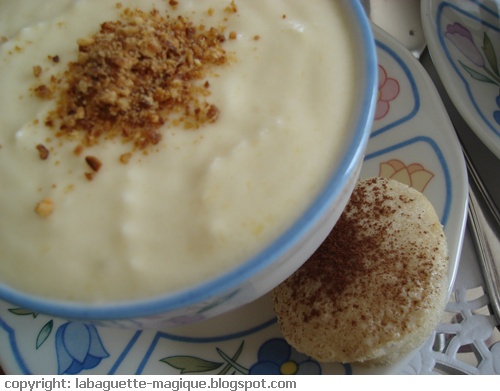
Pasticciu: A rich and consistent egg cream with a swirl of homemade dark liquid caramel, that ended many a Sunday lunch on a high note, served with cuggiollele or canistrelli and a glass of sweet Muscat from the Cape (whose honeydew-like grapes taste like they are bursting on the palate with every sip).

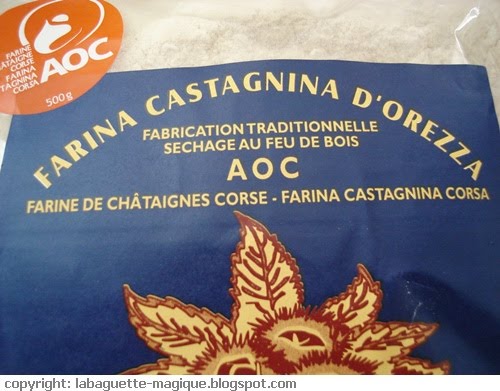
Beignets à la Farine de Châtaigne: A time-saver of a treat, featuring only two ingredients, chestnut flour from the Castagniccia (the Chestnut grove region of Corsica) and water, blended together, blobs of the resulting mix deposited in a shallow fat fryer (a deep heavy frying pan with a good inch of hot cooking oil will suffice) and cooked on both sides, before blotting on kitchen towel. Serve with a sprinkle of caster sugar. Couldn't be simpler!

7 Aug 2010

Corsican Gastronomy - On the Menu (Part 1)

My inspiration for this article will take me back to my souvenirs of mémé, and how in that modest rustic Corsican kitchen of hers, using her ancient yet foolproof kitchen utensils, simple wholesome tried-and-tested family recipes from her elders, and local produce from her trusted local butcher and marchande de légumes (a travelling van that used to deliver a selection of Corsican fruit & veg to the Cape), she would operate her magic.


Her magic could - should - silence the self-important superstar TV cooks, presumptuous Michelin chefs, hyped-up blogging kings and queens who are kidding us into believing that they have indeed reinvented the wheel, when all they have mostly produced is a waff of hot air on the media circuit.

Patience was my grandma's virtue: if a hotpot was supposed to bubble away for three hours, so be it, there was no cutting down time, no shortcuts, because this would alter the taste, full stop. She was also resourceful and pragmatic, whipping up a meal with a few ingredients and using leftovers. The secret to her talent was to cook with heart, this was no half-hearted affair. She relished in anticipation of the effect her cuisine would produce on her guests, and man, did it work!


She was a grandma to be proud of, and  I know I could carry on for the rest of this blog's existence, writing pages about her and rekindling her memory, but these would only be words to you, for unless you have known her, it is difficult to picture what a character she was. I hope this sort of grandma still exists today, and if yours resembles the description of mine, do drop me a line.

Now time to get back to our subject and find below a list of the Corsican dishes mémé used to delight us with (and that you have every right to expect from any self-proclaimed speciality restaurant on the island):

Aïola: This delightfully tasty one-meal soup is on a par with the delicious 'Puchero de Zanahorias' which I had the privilege to taste over 25 years ago, at an off-the-tourist-radar workers' canteen in Malaga where a friend of my auntie used to take us, for its cheap yet flavoursome homemade meals. Aïola, like puchero, was originally the soup of the poor, but don't let this patronising tag fool you. To me, aïola stands above the most poncey veloutés and delicate consommés of this world. A clear stock with fresh Corsican tomato slices, potato cubes, fresh white haricot beans, fresh Corsican marjoram stalks, garlic and an egg per person, poached in the stock. Vitamins à gogo and a party in your plate!


Soupe au Pistou: Here is another liquid culinary delight bursting with vitamins and aromas (pictured above). This Provençal hearty dish is a staple of traditional Corsican cuisine: a carrot, courgette, bean and potato soup livened up by a bewitching combination of fresh whole Corsican basil leaves, crushed garlic and a spoonful of olive oil. Believe me, this warm soup is actually quite refreshing and therefore appropriate for Summer dinning.

Soupe de Poissons de Roche: There is no point visiting an island if, at least once, you do not taste the local fish. Mémé would boast that her fish soup was nicer than restaurant fish soup for she only used the noble part of the fish (i.e. no heads or tails). Her soup consisted of a variety of small local fish (according to the catch), from rougets to girelles, keeping the bigger elements for frying (for another meal). She added fresh tomato and wild marjoram to the stock before sieving and blending. Small fish being what they are (i.e. bony!), you had to expect the odd sneaky bone in your soup bowl (despite all of mémé's care).


Aïoli: Not to be confused with aïola, this garlic mayonnaise is the perfect accompaniement to fresh langouste (lobster) and fried fish. Meanwhile rouille is its spiced-up rusty-looking counterpart. (to be continued)

2 Aug 2010

Corsican Gastronomy - Delicatessen (Part 2)

Amateurs of robust cheese will plump for locally-produced fromage de brebis, while the bravest will up the ante with Corso, but beware as the cheese will start developing a rather pungent smell as it matures! The safer option will definitely be Brocciu (Brousse), an aromatic creamy fromage frais similar to mascarpone that I use in cheesecakes (as an alternative filling), and that is a key ingredient in the insular pâtisserie, the Fiadone (and its mini-version known as Fiadonette, pictured below), a lemon-scented brocciu-filled pastry. For a savoury option, and if given the chance, why not try Ravioles à la Brousse (brocciu ravioli).


Apart from Fiadone(-tte), more pastry delights will await you at the local bakery, namely Canistrellis (aniseed or hazelnut-flavoured biscuits that are usually dipped in coffee), Cugolu (a boomerang-shaped aniseed-flavoured pastry that is also dipped in coffee), Cuggiolelle (sweet white wine biscuits), lemon-scented Frappi (a cross between a doughnut and a churros), and other variations.


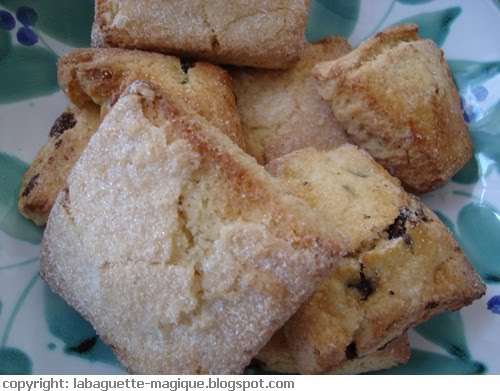
Brioche is also well celebrated on the island, as Brioche au Sucre, an individual sugar-topped round brioche, or its oblong-shaped version, Pannette (also available with raisins). Besides be prepared to find innovative interpretations of traditional recipes, such as savoury bite-size canistrellis (olive or onion-flavoured) perfect with pre-dinner drinks, which are produced in the resort of Macinaggio (under Les Délices de Capo Bianco).

Chestnut-flour-based cakes are likely to be found in this blog, in local delis (and even supermarkets which, for many years, have been keen to stock local produce). Nougats, mountain honey and unusual fruit jams (watermelon, melon, mandarine, cédrat, arbouses, chestnut) will be handy to fly back home.


Finally there is an array of beverages designed to quench your thirst or prolong the holiday spirit well into the night, from local mineral/ spring waters (Zilia, St Georges, Orezza), lemonades (Carina Limunata, Oro) and Damiani cordials, to AOC* wine (white, Muscat, rosé, red, and the port-like Rappu wine derived from the Aléatico grape), with Patrimonio, Plaine Orientale and Cap Corse as the main wine producers.

Pastis Dami (Corsica's answer to Pernod), Cap Corse Mattei (a vermouth/ fortified wine), and chestnut-flavoured lager Pietra are guaranteed to jazz up your après-ski/ pool-house soirées. The island is also reputed for its strong liquors with an acquired taste: Cédratine, Myrte, Châtaigne (chestnut). Novices will find it easier to stick to Mandarine Impériale or Limoncellu (both of which also enter in the preparation of a number of desserts and refreshing cocktails).


Food taste is a matter of opinion, so why not forge your own by experimenting with those new or reinvented flavours, and decide for yourself. Whether it be sweet or savoury, earthy, traditional or adapted to the modern palate, derived directly from the terroir (land) or transformed, there is a food product for every taste, in Corsica. Enjoy!

* AOC = Appellation d'Origine Contrôlée

1 Aug 2010

Corsican Gastronomy - Delicatessen (Part 1)

To begin with, here is a universal truth: when in a typical tourist resort, authentic food specialities will not be found in the most obvious places, i.e. down the neon-streaked, fume-choked main road, sandwiched between the usual tourist trap shops and stalls (identified by their plastic made-in-China 'local' trinkets, dodgy postcards, overpriced bottles of local spirit that have been sitting in the sun day after day, the badly-translated holiday guides that have gathered more than their share of dust, etc.).

Fine Corsican food hamper, Bastia

The authentic will be found off the beaten track. In Venice, why settle for a coffee on the San Marco Plazza that cuts right into your daily budget, when the one ten minutes away will taste probably nicer for half the price and half the snobbery? In Sidari, why put up with nasty fast food, when an unassuming Greek taverna in nearby Perouladès will serve you the best mezze? In New York, why follow the crowds, when a wander round the block could take you to that hidden gem of a deli? The same applies to Corsica.

It pains me to witness those tourist trap restaurants dishing out the mediocrity of world cuisine to the holidaymaker on a budget or in a rush: paella, couscous, stuffed crêpes, spagghetti carbonara, steak and chips, lazy salads, greasy burgers, with often the only dish affiliated to Corsican gastronomy being soupe de poissons (fish soup), friture (catch of the day), or assiette de charcuterie corse (Corsican antipasti).


Hotel La Villa (Calvi, Corsica)

Meanwhile upmarket restaurants are often more preoccupied with presentation than substance, losing the remote Corsican theme into an artshow, balancing that slice of confied chestnut onto the tiny medallion of foie gras, the latter strategically placed on a designer presentation plate between two perfectly-formed carat-sized drops of premium arbouse jelly set against a constellation of champagne espuma... You get the picture. Yet traditional local fayre needn't be out of reach, expensive, fiddly or fuddy-duddy.

While not claiming to provide a comprehensive list of traditional food products you can expect to find on the island (with maybe a bit of detective work involved), this article will give you a general guideline, and hopefully tantalise your taste buds!


If there were only one speciality to try (vegetarians, please look away now!), it would have to be the incredibly tasty smoked, seasoned pork-based Corsican charcuterie that is fairly reminiscent in taste of the Italian dried pork meats: Prisuttu (Corsican ham, slightly darker and thicker than Parma ham), Lonzo, Coppa (both smaller versions of the Prisuttu), Saucisse Corse (a peppery aromatic saucisson sec), Pancetta (strictly nothing to do with the so-called Italian pancetta that UK supermarkets churn out!). You will also be able to purchase wafer-thin Parma ham.

Figatelli pork sausages are a winter culinary must, preferably cooked on an open fire (or be prepared for a lot of smoke in the kitchen) and pressed with their juices between two slices of freshly-baked bread, and you have the Ford Mustang of hot dogs, according to I. Other deli staples will include speciality meat pâtés (mainly wild board or black bird), Corsican olive oil and pistou (pesto). (to be continued)

P.S: Further observations on Corsican charcuterie from The New Gastronomes

30 Jul 2010

Gâteau à la Châtaigne

Approx 10 slices
Preparation: 5 mins
Cooking: 35 mins

 
The recipe for this incredibly easy-to-make flavoursome cake was given to my partner by Jean, our globe-trotting pâtissier. Beneath its golden armour, this sweet treat is a treasure trove of moistness and lightness!


Here cup measures keep the recipe foolproof (based on one cup measure = approx 200g or 1/4l), so put away those scales and measure converters. If you are unable to source Corsican chestnut flour (farine de châtaigne corse) either online, from a specialised delicatessen, or directly from a Corsican producer, replace with any other flavoured flour.
  • 1 cup white flour
  • 1 cup fine Corsican chestnut flour
  • 1 cup caster sugar
  • 1 cup semi-skimmed milk
  • 1 cup groundnut oil (or sunflower oil)
  • 2 whole eggs
  • 10g baking powder
  • butter to grease the tin
Preheat the oven (160°C).

Meanwhile place all the ingredients together in a bowl and blend thoroughly with a spoon. Pour the mix into a greased tin (for reference, I used a 28cm diametre tin) and then place in the middle shelf of the preheated oven.


Cook for 35 mins. The cake should rise, develop a dark golden colour thanks to its chestnut content, and present a slightly crackled look as per the picture. Yet when pricked with a knife, it should present a moist and crumbly texture. Do not be tempted to overcook the gâteau as it would get dry and this isn't the end result we are aiming for here.

Enjoy on its own, or serve with a fresh fruit salad. It will keep for a few days, but I'm confident it will be gone in seconds!