Showing posts with label gâteau. Show all posts

10 Dec 2016

Sweet Dreams are Made of This

Traditionally the lead-up to Christmas is sugar-coated bliss. Codename indulgence. It sees confectioners, chocolatiers, pâtissiers and glaciers (*) whip up a frenzy to a feast for the eyes and the palate. In order to experience the finished article, gently shoo the words away from this page for the photos to do the talking, as an inspirational appetizer. If you are dreaming of a white Christmas, you have it here in layers and textures... Layers of whipped cream and peaks of meringue and lashings of royal icing, for the layers of wool and other fabrics are unnecessary: they may safely remain cosied up in drawers!

Calissons d'Aix by La Maison Jouvaud
Amandines by La Maison Jouvaud

The pastry industry at large is empowered at Christmas: excellence is its byword. From muted sweet nothings to the more elaborate gâteaux, excellence seeks and excellence finds! Dusting off classic recipes, resurrecting old favourites, piping a soupçon of innovation into tradition, or throwing caution to the wind in order to surpass itself within the Christmas logs department.

Dacquoise is a great starting point!
Angelina Paris is sooo jolie! (pict source from top left: 1 * 2 * 3). Montage by LBM, assisted by PicMonkey.

French Christmas logs are likely to be nipped and tucked these days, turning their ephemeral works of art into edible covet pieces of couture. Traditionally every pâtissier worth their salt (and sugar) produces a Christmas log masterpiece every Christmastime. The idea is for the log to stand out and get attention. And if it does, it will end up gracing the pages of fashion glossies and reaping accolades. Art meets the palate, fashion gets eaten up... Call it as you please. We end up with a couture collection of innovative, eccentric and even totally crazed-up edible outfits for a log! Talk about edible design unleashed... The sample below is on the conservative side, but Elle has 33 more for you to gawk at!

L'Instant Féérique by Thiriet, via Elle

(*) glaciers = ice cream makers

31 May 2015

Gâteau Paris-Brest

Serves: 8
Preparation: 40 mins (choux pastry) + 40 mins (filling and dressing)
Cooking: 20 mins + extra 5 mins + leave in the open oven for an extra 5 mins

If a French pastry ever were to be described as la crème de la crème (in every sense of the phrase), then Paris-Brest would be it. The gâteau is classic in style and celebratory in mood, and a piece of French culinary heritage all to itself that goes beyond anything cream cake. If I wax lyrical so readily about this particular pâtisserie, it is simply because it stands as my all-time favourite!


The Paris-Brest dates back to 1910, which despite making it a centenarian, also brings out its timeless appeal! Its circular shape is in reference to the Paris-Brest cycle race. A pâtissier from the Parisian suburbs, Louis Durand, had been tasked by the race manager to create a cake that would commemorate the event.

So here we have a gâteau whose popularity has surpassed that of the actual race. It is made out of light and airy choux pastry (cream puff dough), and sprinkled with a generous helping of aromatic roasted almond slivers, finished off with a fine dusting of icing-sugar. The filling is nothing less than a dreamy fluffy praline mousseline cream whose nuttiness echoes that of the almonds, and peers out of its fine corset of piped pastry to doom us into sweet temptation some more.


The Paris-Brest might appear daunting to bake, only if you follow some of the eccentric variants out there, that make it sound more complicated than it actually is! The best thing to do is to follow my step-by-step foolproof method, and you'll be coming back for more!

[Recipe adapted from Maxi Cuisine magazine from a few years back.]

Choux pastry:
  • 10cl (1/2 cup) milk (whole or half-skimmed)
  • 10cl (1/2 cup) water
  • 80g butter (1/3 cup), cut in small chunks
  • 140g (1 cup) all-purpose white flour, sieved
  • 4 middle-size organic eggs
  • pinch of salt
  • 1 tsp white caster sugar
Filling (praline mousseline cream):
  • 1l (2 pints) milk (whole or half-skimmed, but not fat-free)
  • half a vanilla pod
  • 6 egg yolks
  • 80g (1/3 cup) white caster sugar
  • 25g (1 heaped tablespoon) all-purpose white flour, sieved
  • 25g (1 heaped tablespoon) cornflour 
  • 180g (1 cup 1/2) chopped French pralines (a confection of almonds with caramelized sugar)
  • 100g (1/3 cup + 1 oz) softened butter (left out of the fridge)
Topping:
  • 50g (1/2 cup) almond slivers
  • 50g (1/3 cup) icing sugar

P.S: For baking ingredient conversions, refer to this.


P.P.S: PRALINES-- French Pralines are caramelized almonds. They are sold either whole as a confection, or chopped into a rough granulated texture (see above picture), called 'Pralin' in French. However depending upon which country you live in, French Pralines may not be readily available to purchase. Therefore you may have to resort to making your own, and this easy-to-follow online recipe will do the trick. If you are based in the US, you may want to opt for Glazed Pecans or Praline Pecans from Southern Candy Makers as your closest shop-bought alternative to French Pralin - and for that little Southern touch... All you will need to do is chop the whole glazed pecans/ praline pecans through a food processor until they turn to a granulated texture.

All in all, please be warned about the confusion between Pralines (as in Southern Pecan Pralines) and French Pralines, despite their common French origins. The Pecan Pralines (described by Southern Candy Makers as "similar to candied pecans, only creamier, [they] resemble a cookie, but are actually a crumbly candy patty [made] from fresh cream, butter, sugar, and Louisana pecans") are not suitable for Paris-Brest. Do aim for Glazed Pecans or Praline Pecans instead.


Now back to our Paris-Brest. Preheat the oven (200°C/ 392°F). Prepare the choux pastry: In a medium saucepan and on medium heat, combine (without whisking) milk, water, butter, salt and sugar. When the mixture starts to simmer, add the flour in one go. Then for about one minute and on lower heat, mix together vigorously with a wooden spatula so as to dry out the dough without it sticking to the pan, and you should get a thick and smooth consistency.

Then transfer the dough from the saucepan to a mixing bowl. Add the whole eggs, one at a time, thoroughly incorporating each single egg into the dough with the spatula as you mix together, before you add on the next. Carry on until the dough gets elastic and smooth and comes off the sides of the bowl.

Optionally trace a loose circle (approx. 20cm diameter) on a sheet of parchment paper with a pencil. Then lay the parchment paper onto a baking tray and lightly grease the paper with cooking oil. Then spoon the dough into a piping bag and trace a circle onto the parchment paper and then another circle inside the first (right next to it with no gaps), so that you get a one-inch wide circle. Then pipe a third circle to rest on top of the junction between the first two circles.


You may use a teaspoon as an alternative to the piping bag (which is what I did here) and painstakingly spoon one teaspoon of dough at a time onto the paper until forming a full circle of dough (one inch wide). The finished article, once baked, might not be as full and rounded as the classic (piped) Paris-Brest, but this will not impair the taste whatsoever. And eh, who said Paris-Brest couldn't look rustic round the edges? Actually, [purists, look away now!] should you find convention a tad tricky to handle, you may want to adjust the shape of your Paris-Brest to rectangular, as this will neatly fit in the baking tray (which is what I did here too!).

Sprinkle a generous handful of almond slivers all over the choux pastry. Bake in the oven (200°C/ 392°F) for 20 mins. Never be tempted to open the oven during the baking process or the pastry will deflate and never raise again! When the 20 mins are up, turn the oven temperature down to 180°C/ 356°F and bake the cake for a further 5 mins. Then turn off the oven completely and open its door and leave the cake to cool off for 5 mins before taking it out of the oven. This will prevent it from deflating too much. The pastry should be golden in colour when it comes out of the oven.


Only when the cream puff pastry has thoroughly cooled off, should you split it in two equal horizontal halves, carefully and using a bread knife. Personally I find that a serrated grapefuit knife will do the trick nicely, thanks to the fact that the centre of cream puff is hollow.

Prepare the praline mousseline cream filling: A mousseline cream is basically pastry cream (crème pâtissière) to which butter has been added. Note that the cornflour will lighten the cream consistency. However if you have no cornflour handy, then adjust the all-purpose white flour quantity accordingly, i.e. to 50g (1/3 cup OR 2 heaped tablespoons).

Pour the milk into a saucepan. Split half a vanilla pod lengthways and scrape the seeds into the milk and add the pod shell to it. Bring the milk to the brink of simmer, whisking frequently so as to prevent it from sticking to the bottom of the pan. Meanwhile combine the egg yolks and sugar into a big mixing bowl and cream until white and fluffy. Then add the combined white flour and cornflour in one go. Whisk together. Strain the vanilla pod out of the warm milk.


Add the warm milk to the yolk and sugar preparation in the mixing bowl. Note that the milk must not be boiling hot or it will cook the egg yolks, which is NOT what we want! Whisk together and then pour the cream back into the pan, on medium heat, until it has thickened up and a couple of bubbles have risen to the surface, indicating that the flour has cooked. Turn off the stove. Add the chopped pralines and mix with a wooden spatula, together with the softened butter, cut in chunks.

P.S: For the purists! Some pastry chefs would recommend that you go the extra mile with the praline cream. Once it has cooked - and before any of the softened butter has been added to it - pour the cream into a mixing bowl that sits in a bigger bowl that is filled with ice cubes. Leave the bowls in the fridge for one hour. When the time is up, take the cream out of the fridge and beat it to unset it. Then deal with the softened butter by creaming it with an electric whisk. Add the creamed butter to the praline cream, a little at a time, so as to get a smooth consistency.

Pipe the praline mousseline cream onto the lower half of the choux pastry circle, or alternatively dollop it with a spoon, and then either smooth the edges with a small pallet knife or shape them with a fork (which is what I did). Carefully position the upper half of the circle (i.e. the cake lid) onto its creamed-up lower half. Refrigerate the Paris-Brest until ready to serve. Liberally sprinkle icing sugar before taking to the dinner table, and just let your guests do all the swooning for you!

Psssst! Do not throw out those left-over egg whites! Whip them into Macaroons, a sweet teatime companion.

11 Feb 2012

Snowed Under! (Part 2)

Hey, it's been snowing across the net too! So then stay in with us, snuggle up and check out this selection of beautiful inspiring photography... Oh, hang on a minute... Is it me or is there a Valentine's hint down our icy Winter theme?


Sources: (1) via Pinterest. (2) 'The Kylie Fashion Shoot' by Stylist (pictured by William Baker). (3) 'Triple Layer Vanilla Ruffle Cake' by Red Magazine. (3) 'Vanilla Rosewater Cupcakes' by Sprinkle Bakes.

23 Apr 2011

A Week-End Wonderweb 23-04 (Easter)

Of all the imagery associated with Easter, the most enduring one is young, fresh, light, floral, regal and Spring-like: cute little lambs, fluffy chicks and endearing bunnies, Easter eggs and chocolate delights aplenty, ribbons, bells and bows, blossoms, bird nests, set against a palette of soft greens, muted pinks, pale yellows and enchanting creams, and all singing from the same hymn sheet to deliver sweetness and eye candy!


Sources (top page down):

22 Apr 2011

On and Off the Magic Milky Way (Part 2)

Within the wider dairy produce arena, I was also a Rachel's Organic and Yeo Valley Organic customer (two well-established UK organic dairy brands fondly remembered for their creamy yoghurts and scrumptious yet simple desserts. Obviously if I were still living in England right this moment, I wouldn't put the sentences in the past like this just isn't true anymore. If still in England I would indeed still purchase those brands as I am totally sold to their ethics, philosophy and quality produce.


Back to our UK years, if no organic milk was available from the store, I would reluctantly relent to the mass-produced non-organic standard alternative, and would (more happily) compromise with a couple of tins of Carnation milk, as the processed (evaporated) milk somewhat tastes nicer than standard milk, it tastes like caramel to me. What I would do with Carnation was cut it with a third water, before heating up in a pan for my daily breakfast muesli (Alpen, occasionally Dorset Cereals and even posher ones if I felt flush, or simply stick to Sainsbury's own continental style which was decent enough).

So yes, I consumed my muesli in a very continental way, blended with chocolate-flavoured hot milk (although this might just be my version of continental, I'm not quite sure, just that I can't stand the taste of milk on its own, and simply abhor cold milk - and yes I am daring to dedicate an article to milk while cultivating so many particularities about it!). The girl is strange.

Dairy high: Victoria Sandwich
With Carnation evaporated milk and its caramel undertones, the issue of cow welfare would be sneakily shifted to the back of my mind, to the back burner. Cow welfare? What is that strange girl on about? Oh yes, in the context of industrial farming, when you taste that mass-produced standard milk whose carton price has been squeezed even tighter by the notorious supermarket purchasing lobbies at the expense of the producer's profit margins and subsistence, and to give the end-consumer that elusive feeling that they are making a bargain while the one winner really is the retail chain, the dairy producer has no other option than turn to even cheaper feed for his cows and inflict more crammed living conditions onto them, while increasing his milk quotas, and that means demanding an even higher return on investment from the herd. Therefore expect a higher, faster, more intensive milk turnover with all the consequences that go along. Some French dairy producers push the boat even further by moving their production altogether to cheaper countries like Romania, spelling an even harsher life for the cows.

The objective is for the dairy cow to produce more milk and be milked round-the-clock to exhaustion, until both the milk and the animal's life have drained out! This gives the idiom 'milking it' its powerful significance. Cows develop a weakened immune system despite the battery of antibiotics that they are subjected to, many develop lameness. Besides their over-worked udders are susceptible to mastitis (sores, pus, blisters) that not only cause the cow terrible discomfort, but also run the added risk of discharge into the actual milk output, as Heather Mills (ex-Mrs Paul McCartney) had highlighted to the press once.


The cow's ultimate reward for that thankless life of labour is to have its already shortened life taken away while still a few years away from 'retirement', with the ultimate stress of the abattoir lottery (some slaughterhouses being less 'humane' to the animals on death row than others, shall we say...). And at the end of the line, that's our dairy cow ending up hacked, chopped, filleted and minced to pieces. From a froth of hot milk sitting nicely onto your cappuccino, all the way down the food chain to that steak fighting the French fries for space on your plate, that's all in one day's work when you are a cow!

Life as a standard non-organic mass-production dairy cow is pretty bleak, as we've just seen: the cow as a relentless milk factory on legs with basic - even miserable - life conditions, whose life ends up as a meat factory, the four legs up. This is basically and simplistically the picture, and it would be naive for the consumer to assume otherwise. I too used to kid myself until recently that 'maybe oh so maybe' dairy cows got spared the gun and simply produced milk at a leisurely pace, after their daily wander in some lush postcard-perfect clover-rich pasture, all in all enjoying a long and merry life before naturally dying of old age...

Dairy high: Pasticciu (Corsican custard speciality)
Enters the next instalment in our mass-production milk saga, relayed this time by UK charity WSPA (World Society for the Protection of Animals) via its punchily energetic and innovative Not In My Cuppa campaign fighting proposals for the planned controversial super-mega Nocton dairy farm in Lincolnshire (UK) that would have spelled further doom for the cows in the name of higher yield. The original proposal was for the mega dairy to house 8,100 battery cows, with a view to produce at least 38 million litres of industrial milk a year (19,300 pints per cow per year), enough for 2.5 billion cups of tea, according to The Soil Association. The mind boggles! Then the proposal was revised down to 3,770 cows, before the plans were withdrawn in February 2011. It's a victory and I am personally delighted! Yet Not In My Cuppa campaigners and supporters need to remain vigilant as similar proposals could spring up again in future.

Of course organically-certified dairy cows are not spared the fate of turning into meat chops. But at least - in principle, and I do weigh those words carefully - they are guaranteed more acceptable welfare conditions than their industrial-farming counterparts. Meanwhile as consumers we have the power to vote with our feet.

Leading by example: London's Kaffeine only uses organic milk
Thus for our cappuccino or cream tea, would we not be prepared to pay that little extra and demand from our favourite cafés to switch to organic milk alongside us, in order not only to safeguard our conscience but ultimately the dairy cows living conditions, and the incidence these conditions have on the quality and taste of the milk? Milk from miserable, overworked, weakened, exploited cows: no way! Milk from happier, less-crowded, better-fed, better-looked-after cows: yes please, we're in! I'll put the kettle on right away!

Further resources:
  • The Soil Association, a UK charity campaigning for environmentally-friendly farming practices
  • WSPA (World Society for the Protection of Animals), the world’s largest alliance of humane societies and animal protection organisations, representing over 1000 member societies in more than 150 countries, with consultative status at the United Nations and the Council of Europe
  • CIWF (Compassion In World Farming), the leading farm animal welfare charity.

20 Apr 2011

On and Off the Magic Milky Way (Part 1)

Here is a four-letter word that is so part of our lives that we almost forget it's there. Rest assured, that four-letter word is not offensive, it is pretty safe and friendly too, if not essential - to most of us. It is a basic food commodity, just like eggs, bread, 'tatties', pasta, rice, sugar, tea or coffee.

Sweet Paul's Strawberry Shake (Spring 2011): click image for recipe
It forms an essential part of the non-vegan diet, consumed in its simplest unadulterated form with the breakfast bowl of porridge, cornflakes or muesli. Yes, that four-letter word is milk. And once we start skimming beyond its surface, we start to discover the complexities of an otherwise easy-going life companion.

Milk is available not only in its liquid form (as whole i.e. full-fat, semi-skimmed or skimmed), or a thicker richer stickier form (as condensed or evaporated, a must for cheesecakes, banana banoffee pies, and generally to achieve creamier puddings), or in powdered form that is reconstituted by adding water. Milk is available either fresh (arguably the best, yet with a shorter shelf life and the necessity to keep it refrigerated at all times), or pasteurised/ UHT (Ultra-Heat Treated) for that guarantee of a longer shelf life (at least while the container remains unopened).

Sweetapolita's 'Inside-Out Neapolitan Layer Cake'
In certain countries like the UK, milk is still home-delivered early each morning by the milkman from the local dairy, a tradition and convenience now sadly losing its mojo, especially in towns and cities where the competition and market penetration from the supermarket chains has become fiercer than ever, and this despite the fact that milkmen have diversified their activities with the provision of other dairy products, fruit juices, eggs and even bread: breakfast ingredients par excellence delivered to your doorstep!

Milk comes in a glass or plastic bottle, in a brick, in a tin or - for those of us lucky enough to trace it back to the source, from the cow's udder. Although mind you, milk is not solely restricted to the cows. That would be disregarding other mammals, like the goat, and those which too breastfeed their youngs but whose milk is not channelled down the humain food chain for human consumption (cat milk anyone?). There are other types of milk out there which have opened up new horizons to our vegan friends: soy milk, almond milk, coconut milk, etc.

The Design Observer Group, 'A Collection of Vintage Cheese Labels'
Back to our cow's milk, it is also available processed into dairy products: butter, spreads, cheese, yoghurt, fromage frais, custard, cream (single, double, whipped, clotted), ice-creams and shakes, or used as a key-ingredient in a number of desserts, chocolate bars, sauces and savoury dishes (gratins, mashes), without forgetting our hot drink fixes in the form of cappuccinos, lattes, macchiatos, hot chocolates and café mochas which simply wouldn't be so without their milk addition... You got it, milk is everywhere and trying to avoid it altogether is no mean feat: just ask a vegan once they step out of the safety of their home in search of ingredients or an eaterie that caters for their needs...

With its high calcium content, milk is recognised as a nutritive and healthy option by nutritionists. The recommended milk intake assists children in their growth, it benefits adults too by assisting them in taking care of their teeth and bones, and is said to limit the effects of osteoporosis in later life. It is however fatty and those seeking to reduce a high cholesterol level will resort to the semi-skimmed or skimmed version, although moving to skinny lattes after years of indulgent full fat lattes might take a little while.

Source: Plan59
Nevertheless detractors claim that cow's milk is only directly beneficial to its calves as it is designed to feed them first and foremost, just like human breast milk is designed for human babies. We cannot argue on these laws of nature. However in Part 2, I will have the opportunity to touch on the ethics of dairy farming.

Oh, and one last 'detail', actually the detail that prompted me to write this article: milk may be purchased either as organic or standard (i.e. non-organic). Ten years ago sourcing organic milk across all four major UK supermarket chains (Tesco, Sainsbury's, Asda/ Walmart, Morrisons), upmarket food chains (M&S, Waitrose etc.) and down the high street grocers and delis, was no mean feat...  


Thankfully I was able to source organic British milk from my local Sainsbury's (Cheadle, Stockport) for most of the last decade (despite single brand exclusivity, with limited supplies at times, or stocks running out altogether, forcing me to switch to non-organic. The one organic milk brand that sticks to my mind throughout the last decade as a staple favourite on my shopping list was Moo (how quirky is that for a brand!). (to be continued)

2 Apr 2011

A Week-End Wonderweb 02-04 (White)

A symbol of peace, purity and virginity, a colour traditionally associated with weddings or funerals depending upon custom, white is also a lifestyle and design choice, or a refuge even, whenever one feels coloured out ad nauseam; stylish and timeless, white is back as the new black.


 Sources (top page down):

26 Mar 2011

A Week-End Wonderweb 26-03 (Dessert)

Aside from good company and interesting conversations, the most enjoyable part of a dinner party is - for those of us with a sweet-tooth inclination - the anticipated dessert, prepared, shop-bought or made to order for the host(ess): from a baking classic to the decadently-laden crème de la crème, the cherry on the cake is likely to stir up more than one capital sin, and sure enough we'll even come back for more!


Sources (top page down):

26 Dec 2010

Cool Coco Yule Log

Serves 8
Preparation: 25 mins
Cooking: 10 mins


If you decide to steer clear of chocolate in order to pre-empt any potential adverse effects it might have on your already calorie-rich Christmas menu, or to demonstrate that a Yule log dessert needn't be chocolate-based, or if you are simply on a mission to torment your chocoholic guests (for whatever reason this might be!), enters this snow-white delight, straight out of a winter fairy tale!


As light as a scoopful of snowflakes, with delicate Tropics undertones, this log will get temperatures rising! This is white Christmas in edible form, a coconut treat that will light up eyes and get tongues wagging. It will also nicely complement a Cool Yule home décor of white, pastels, silver and gold.

The beauty of it all is that it can be prepared up to 24 hours in advance, either in its entirety or just the biscuit base, with the cream filling & topping whipped up a couple of hours ahead of your lunch/ dinner. You are advised to read the whole recipe beforehand so that you can organise yourself accordingly on the day.

Biscuit base:
  • 4 organic eggs (yolks and whites separated)
  • 80g caster sugar
  • 80g flour
  • 25g unsalted butter + approx. 20g for greasing
  • parchment paper
  • pinch of salt
Filling & topping:
  • 150g desiccated coconut
  • 125g icing sugar
  • 500ml double-cream (very cold)
Boozy syrup:
  • 100g white caster sugar
  • 4 tablespoons water
  • 4 tablespoons orange liqueur (ex: Cointreau) or mandarine liqueur
Topping suggestions:
  • Caramelised star-fruit or kumquat slices
  • Fresh physallis fruit
  • Candied orange peel
  • Sugar pearls, sprinkles, hundreds of thousands, etc.
  • Decorative flowers or figurines made out of almond paste or icing
Block of almond paste, ready for use
Start off with the biscuit base. Pre-heat the oven (180°C). Line a non-stick baking tray with parchment paper that you will grease as an added precaution (the biscuit does tend to adhere when cooked). Melt the butter in a small pan over a small flame. Leave to cool.

Beat up the yolks and caster sugar together until the mix pales down in colour and doubles up in volume. Then add the flour and keep blending together. Add the melted butter.

Whisk the whites stiff with one pinch of salt (acts as a stiffening aid). Delicately scoop the whites one spoon at a time into the yolk and flour mix, blending carefully and making sure that the batter remains light and fluffy throughout. Then pour into the lined baking tray, ensuring it spreads evenly across the whole surface. Place in the oven for 7 mins. The biscuit base should turn a pale gold (make sure not to overbake it or it will lose its moisture and elasticity).


While the biscuit is baking, prepare the boozy syrup. Combine sugar and water together in a small pan and boil until the sugar has melted. Then add the orange/ clementine liqueur and remove from the heat. Set aside.

Dampen a clean kitchen towel under the kitchen tap and then place it straight and unfolded on top the biscuit still in its tray, as soon as it comes out of the oven, and hold firmly together over your worktop or kitchen table. Carefully overturn the tray with the towel still firmly on top and deposit the upside-down biscuit onto the towel onto the work surface.

Peel the parchment paper off, ever so slowly and delicately, and then roll the biscuit base into the towel. Unroll and immediately soak the biscuit with the syrup using a tablespoon, until it saturates (you may not need to use up the syrup). Roll up the biscuit without the kitchen towel this time, and reserve in the fridge.


For the filling & topping, make sure that you don't skip on this important next step: you are strongly advised to place the double-cream for half an hour in the freezer before use, together with a freezer-proof blending bowl (ideally the blending bowl should stay in the freezer for a couple of hours). If you choose not to follow those recommendations, do it at your peril as you may experience difficulty in getting the whipped up cream to set (thicken) properly.

Gather the (very) cold double-cream in the (very) cold bowl and electric-whisk until it sets, i.e. forming crests. This process will require perseverance (a good 5 minutes). If you are struggling, the use of a stabilising agent (ex: Kremfix) should help. When you have reached the thickened 'Chantilly' consistency, add to the desiccated coconut and icing sugar combo. Blend all together with a spoon, then unroll the biscuit base carefully, spoon the cream on top as a uniform layer (approx. 1cm thick) and roughly flatten with a spatula. Roll the biscuit and then finish off with the remaining cream spread all over, using the spatula. Then place back in the fridge.


Finally decorate just before serving. On the pictures here, I hand-fashioned roses out of ready-made ready-coloured almond paste that I flattened into a long strip (for each rose), then shaped into a rose by loosely rolling the strip. The cupcake craze has encouraged an explosion of cake-topping opportunities, within the reach of the local supermarket, and I encourage you (and your children if you have any) to experiment with decorations and just have fun together! After all, Christmas is the best excuse to let the child within loosen up! And eh, who said this log was only made for Christmas anyway? Moi?...

13 Sept 2010

Cheesecake Nathalie

Serves 8 generous slices
Preparation: 15 mins
Cooking: 40 mins


My first taste of the recipe dates back to 1987, as a student on a week-long linguistic trip to Oxford, while staying with a host family in nearby Cowley. Although that first taste involved the 'delights' of a ready-mix, I was hooked. Ruth, my English tutor, helped me crack the code, and once back in France, I perfected a recipe that still serves its purpose to this day, based around French alternatives, but don't let this lead to scepticism, for my version of the cheesecake certainly has an army of aficionados on both sides of the Channel, with my brother Steph its number one fan!


Why is my cheesecake a winning recipe? Because it combines the caramelised, sugary flavours of Speculoos with the subtle tang of lemon, and is built around a duo of textures that complement each other: the blitzed crunchiness of the biscuits set against the soft melting, yet plump bite of the filling. Also for those of you who are no fans of anything cream cheese and the likes (and this includes yours truly!), this cheesecake simply does the trick.
  • 500g 'Speculoos' biscuits (or plain 'Rich Tea' biscuits or Graham crakers)
  • 25g butter, cut in chunks
  • 50g flour
  • 10g baking powder
  • 50g caster sugar
  • 1 tablespoon vanilla-flavoured sugar (optional)
  • 2 eggs, with yolks and whites separated
  • 50cl double cream
  • 500g fromage frais
  • 3 small organic lemons (or 2 bigger ones), juiced
Line a sandwich tin (preferably one with a removable base, i.e. a springform cake tin) with greased parchment paper. Break the Speculoos biscuits in halves and blitz them in a food processor to a fine powder. Alternatively, lay a clean kitchen towel on a work surface, break each Speculoos in half, and fold the towel over to cover them; then roll a rolling pin over the towel several times until the biscuits have turned into thin crumbs. Pour the biscuit powder into a mixing bowl and add butter. With your fingers, carefully mix the butter and crumbs together, and then pour the biscuit mix into the tin, making sure you press it down evenly. Reserve in the fridge.


Pre-heat the oven (190°C). Prepare the filling by blending together with a spoon the flour, baking powder, sugar, vanilla-flavoured sugar, 2 beaten egg yolks, double cream and fromage frais. Add the lemon juice and mix again together. Then whisk the 2 egg whites until firm and add them delicately to the preparation, being careful to keep them fluffy and not to dissolve them in the process. Pour the filling onto the biscuit base (that you had reserved in the fridge), and place the tin in the oven. In the last 5 minutes of cooking, check the consistency of the filling with a knife: although it still needs to stick to the knife, it also needs to be set. Besides the cheesecake should present a nice mottled golden colour as per picture.


Remove the cake from the oven, let it cool down completely before placing in the fridge. Serve on the day - or better still the following day - either on its own, or with a fruit coulis: strawberry or raspberry work very well in taste, colour and flavour.

8 Sept 2010

Foregone and Forgotten?

A nostalgic reminiscence of what appears to be the now-forgotten French pastries of my childhood. Although they have disappeared from my environment, if you do happen to spot them when out on your travels, do let me know!

However if these pastries seem to have defected the shelves of the modern pâtisserie shop, I hope that by talking about them I will trigger a mission in others to help me revive their popularity, while at the same time I will be attempting to understand why they simply vanished off the radar in the first place.


L'Etoile (star-shaped cream puff): This one probably stood at the top of my viennoiserie paradise and it held a starry role in my childhood. It was soft, light, fun and uncomplicated, a complete kid-pleaser consisting of fluffy choux pastry shaped into a star the diameter of an adult's hand, and finished with a sprinkle of sucre grélon (thick decorative hailstone-like sugar grains). Why did the stars shoot out of sight and into oblivion? It could be that they were tricky to assemble, easy to tangle or break off, took lots of space on the shelf and didn't fit nicely in a standard paper bag... In the 1980s, they gradually got replaced with the chouquettes (an adult version of the star, according to I, same recipe but without the fun and shape!). The chouquette, a northern speciality, literally means 'petit choux', a miniature choux, sprinkled with grélon sugar.

Le Cornet à la Crème (cream cornetto): I saw this filling viennoiserie as a winter ice cream, available from bakeries mainly. It was made up of rolled puff pastry shaped into a cornetto and filled to the brim with set crème pâtissière. The cornets for sale were handily propped inside a deep flutted brioche tin on the bakery counter. Once I'd bought my cornet, I would eat it the same way I would an cornetto ice cream, for that ultimate pretence! So then, what happened to the cornets of this world? I presume they were made in the first place using a surplus of pastry and cream. Maybe bakers and pâtissiers learnt to be more efficient with their usage and stocks, and the need for those pâtisseries just died out as a result... Or maybe it is a bit more complicated than that.

Le Gland (acorn-shaped cream cake): I remember my grandma treating me to those pretty and incredibly morish pastries. As a child, they were tricky to eat and potentially messy. Those slightly flattened acorn-shaped choux were filled with crème pâtissière (flavoured with a hint of kirsch), and topped with a pistachio-coloured sugar icing and a sprinkle of dark chocolate flakes at the narrow end of the acorn. Although still on the scene today (but less represented nationwide), the gland has encountered competition in the form of other figurines (cute little pig or the green fig in Corsica) which are coated in almond paste (as opposed to sugar icing)...

Le Cygne (praline custard-filled swan-shaped cream puff): If you loved Paris-Brest gâteau (pictured below), but couldn't justify the expense or the size, then your individual portion of Paris-Brest did the trick impeccably: choux pastry (a recurrent theme it seems in our article!) packaged into the shape of a swan - no less - with a delicate filling of praline-flavoured whipped cream, for that moment of indulgence a child could not resist: 'Mum, I promise I'll tidy my room!' The tiny Pâtisserie Courtaux, at the bottom of la rue de Paris, made the best cygnes I could wish for. Since, the swans seem to have defected to sunnier climates after the pâtissier retired. The only Paris-Brests I can source these days are either in their original ring-shaped format or miniature version... The swans were probably too fiddly and fragile to make it into the 21st century...


La crème de la crème: Paris-Brest gâteau

And for good measure, I'll dedicate this last one to my mum who regrets the fact it has been pimped up and replaced by a bunch of colourful impostors:

Le Macaron (macaroon): So no, I won't be praising those scarily perfectly-formed coloured designer fixtures of the pâtisserie scene that play tricks on the colour-blind. The ones my mum is on about were bigger in size, more consistent, and simply white. No naff flavours, no food colourings, just a simple macaron. So simple, a clever soul had to alter it to turn it into a bit of a parody, let's be honest... But the pay-out for the guy has been formidable and he has laughed all the way to the bank ever since!

30 Jul 2010

Gâteau à la Châtaigne

Approx 10 slices
Preparation: 5 mins
Cooking: 35 mins

 
The recipe for this incredibly easy-to-make flavoursome cake was given to my partner by Jean, our globe-trotting pâtissier. Beneath its golden armour, this sweet treat is a treasure trove of moistness and lightness!


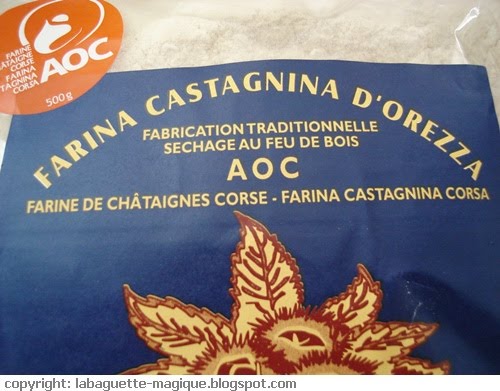
Here cup measures keep the recipe foolproof (based on one cup measure = approx 200g or 1/4l), so put away those scales and measure converters. If you are unable to source Corsican chestnut flour (farine de châtaigne corse) either online, from a specialised delicatessen, or directly from a Corsican producer, replace with any other flavoured flour.
  • 1 cup white flour
  • 1 cup fine Corsican chestnut flour
  • 1 cup caster sugar
  • 1 cup semi-skimmed milk
  • 1 cup groundnut oil (or sunflower oil)
  • 2 whole eggs
  • 10g baking powder
  • butter to grease the tin
Preheat the oven (160°C).

Meanwhile place all the ingredients together in a bowl and blend thoroughly with a spoon. Pour the mix into a greased tin (for reference, I used a 28cm diametre tin) and then place in the middle shelf of the preheated oven.


Cook for 35 mins. The cake should rise, develop a dark golden colour thanks to its chestnut content, and present a slightly crackled look as per the picture. Yet when pricked with a knife, it should present a moist and crumbly texture. Do not be tempted to overcook the gâteau as it would get dry and this isn't the end result we are aiming for here.

Enjoy on its own, or serve with a fresh fruit salad. It will keep for a few days, but I'm confident it will be gone in seconds!