2 Jul 2010

An Attention to Detail (Part 1)

To some of us, rusticity may conjure up images of simple - even primitive - countryside dwellings close to nature, yet with limited/ basic home comforts and no luxuries. We picture them in an unpolished, unrefined, unfinished, unattractive sort of way, in need of a Kevin McCloud Grand Designs make-over...


We couldn't be further from the truth. Maybe it is that our modern conception of rusticity has widened to incorporate any 'ancient' (old) building that is found in the country and that has been left untouched by expectations of a modern lifestyle. Yet in these 'rustic' properties, I have found rough diamonds: self-contained households that paid an incredible attention to detail, the kind that, transposed to our modern days, would elude the average architect and home designer. I have discovered skilled building crafts excelling through competence and ingeniosity, mastering difficulties imposed by the terrain, the logistics and the technological advances (or limitations) of the time. I have marvelled at the fact that it seemed no expense, no effort were spared to construct public and private buildings, from the sacred to the profane, that would stand the test of time and offer their users a domotics solution that would transcend the fickleness of trends and fashion.


St-Pierre

Any examples? Let's start with our humble 'rustic' chapels scattered in the mountains, celebrating popular religious icons, from la Madonna (Marie) to St-Pierre, Ste-Claire, Ste-Anne, St-Pancrace, St-Roch, St-Jean, St-Marc, St-Côme & Damien, and others... Places of worship that also acted as social points, as this is testified by the ubiquitous built-in stone benches, with parishioners and non-parishioners alike congregating outside the main gates (parvis) for a spot of chit-chat and to put the world to rights.

Some country chapels (including those now sadly ruined) illustrate attention to detail through plasterwork, whitewashing, painting, stencilling, cornicing, carving, paving, woodwork and metalwork. This involved the skill of craftsmen, tradesmen and 'minor' artists from local areas or further afield, sometimes from as far as Italy.


St-Pancrace

To historians and the ever-more blasé public, these may not be works of art compared to the Sixtine Chapel, yet to me, they embody art in its pastoral sensitivity and sensibility. At the same time, they send out a red alert that if we just carry on accepting loss and decay and look for art and the sacred within the obvious rather than within the more mundane, those testimonies of a lifestyle gone will one day blur into the collective psyche before disappearing without a trace and without a care... (to be continued)

24 Jun 2010

Walled Gardens in Stone Silence (Part 2)

Some of these wall constructions are little gems of ingenuity and complex architecture incorporating pillars, arcades, niches, shelters, built-in benches, wells, water basins, built-in irrigation systems, stepping stones. Pictured below is an example of this attention to detail (albeit now compromised by neglect) showing a stone staircase integrated within the wall of a culture terrace. I remember that the stairs were still intact less than 30 years ago, until a maquis fire and rampant scrub vegetation started to destabilise it. According to mémé, broad beans used to be cultivated on this very terrace.


Mémé also used to mention that local families were continuously keeping an eye on their walls, checking the foundations, adding a stone here, replacing a stone there, eradicating bramble, thorny ivy, salsepareille and other invasive creepers. She remembered families seeking the local justice of the peace if an ill-intentioned individual had 'displaced' one of their stones... Walls were sacred indeed!

In my countryside walks of late, I have found solace and fascination for those walls, as well as respect. They accompany my solitary journey of discovery of a slow-paced Corsica, of a bygone era that is increasingly being cast aside for the bright lights. If only they could free themselves from their stone silence and provide an account, a potted history of the cultures they helped sustain, the farm animals that lived there, the families that sweat tears and blood to make a living against all odds, their joys, their blessings, hopes and fears!


These walls testify that once upon a time, no less than half a century ago, human activity was still commonly found in the Corsican countryside. This may be hard to imagine today as many of the rural outposts stand empty, lay in semi-neglect or are put to different use (through mainly property schemes). With rural desertification a reality, much of the countryside now stands in resigned stone silence, showing or still just about hiding behind tall walls the remnants of an agricultural tradition, be the abandoned orchards, the overgrown fields, the derelict garden shelters and paggliaghi (stone mountain shelters used by shepherds).

Elsewhere on the island, countless other wall structures are slowly but surely falling into disrepair, crumbling away under the passing of seasons (heavy rain and hot weather), the assault of invasive wild vegetation, and lack of care. Some are past this stage already and now a heap of tumbled-down stones that, at best will be salvaged for a new build.


However some of our counterparts have realised the importance of those walls, not just as sociological testament, but also as part of land enhancement and preservation, and I have seen examples of those old walls breathing a new life under a restoration project. Let's mention in passing that restoration is a costly and labour-intensive process, and if you are looking at having stone walls built from scratch, expect to pay on average 50 euros/ sq.m.

Let us hope that the future of walled gardens and stone walls in general is not going to be pinned to a photo album, onto a museum wall, or rediscovered through archeology... The future of the past is today.

Further historical insight (photographic archives):


Source: ETH Zurich, ETH Bibliothek: Korsika 1922, Rebterrassen Bei Nonza (terrace cultivation in Nonza), photography by Eduard Rübel. This invaluable photograph gives the magnitude of land management and terrace cultivation around the Corsican coastal village of Nonza, on the Western front of the Cap Corse region.

Walled Gardens in Stone Silence (Part 1)

In my Land of Labour/ Land of Leisure post, I touched on one of the features of Corsican landscapes: the old stone walls and stone terraces. Of course, these features are not solely restricted to this part of the world; they will be found anywhere that is mountainous, hilly, rocky, from the Peak District of England to Madeira, via Tuscany, the sweet potato fields of Nerja (Spain) and much further afield. They didn't only act as boundary posts, their purpose was to contain soil and level land to make it cultivable, and prevent natural erosion...


My dad has always commented on those walls that we would spot by the roadside, or boldly erected on desolate hillsides and inhospitable mountains. He is fascinated by them, by the difficult and hazardous feat of engineering and logistical challenge they would have represented at the time of construction. But neither harsh topography nor primitive tools hampered builders' enthusiasm, it seems! Huge chunks of rock would have been hammered into more manageable pieces that would have been transported by cart, on mule-back/ donkey-back, or by hand to hard-to-reach places, then laid out into those dry-stone walls.

Today it is so easy to ignore those humble walls, to see them without giving them the time of day, no second look or a mere mention in a tourist guide, yet I would ask you to pause for a second and think of the thousands of man-hours they would have swallowed, and the human toll even. These walls facilitated agriculture, pastoralism and peasantry. By providing anchorage, they provided boundaries, enclosures, shelters, land division and soil retention. They allowed the local population to survive, live off the land, prosper to an extent and stay on the island as a result.


Walls were also found in the fertile plains, on flat terrains, sheltering cultures against the winds and providing welcoming shade for the more delicate crops. Stone structures were not solely aimed for cultivation. Some pictured here epitomise civil engineering: roadside parapets (sturdy stone walls built to reinforce mountain roads and to buffer traffic against lethal skids), minor stone features strengthening mountain paths, and stone bridges that linked river banks and enabled roads to bypass the deep curvature of mountains.

The build material used for the walls is also a good indicator of local available resources. A rather peculiar example will be the well-camouflaged WWII German blockhaus built by the roadside in the Ponte Leccia area. A more classic example will be the proximity to a waterfall, a river, a brook. They will have provided a readily-available source of pebbles and polished stones, some of them incredibly decorative.


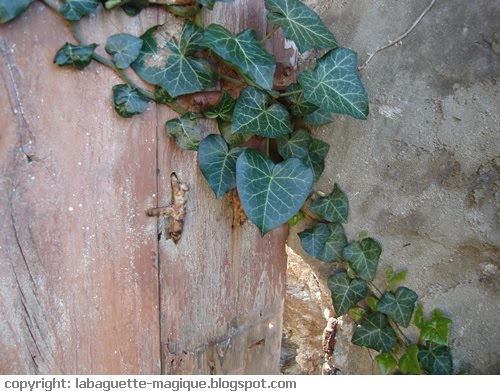
Talking of the more recently-built walls (probably 100 to 150 years' old), the mortar used for their construction will have been based on sand from the river banks, and you will notice small white stone incrustations (see above picture as a perfect illustration of plant intrusion). Likewise seaside proximity will have enabled our ancestors to build walls using pebbles, as seen in La Marana seaside area, nearby the beautiful cathédrale de la Canonica, an imposing country church. (to be continued)

23 Jun 2010

Land of Labour/ Land of Leisure (Part 2)

Undeniably (and despite recession still crippling the building industry elsewhere), the construction process is in full swing throughout Corsica and is set to enjoy further growth in the coming years as land speculation and property developments are hot potatoes on the island, fuelling riches and tourism. South of Bastia, in the Plaine Orientale, the plains traditionally referred to as the fruit gardens of Corsica, struggling (or non-struggling) land owners are selling their fields and becoming instant euro-millionaires (10,000 sq.m. sold for 1.2 million Euros earlier this year)!


We may agree or disagree with the way land is being put to use, however French agriculture and peasantry in general are struggling for survival, and the selling off of family heritage is not a carefree decision for the parties concerned: rather it is often a reluctant, last-resort, bitter affair, and perceived deep down as a personal defeat or betrayal. Currently the average Corsican farmer is burdened with 58,170 euros woth of debt*. In the same breath, the extent of this agricultural malaise translates into the fact that 100,000 farms are threatened with closure across France over the next 10 years**.

The Corsican landscape is changing indeed, and probably at a faster pace over the last 10 years than in previous decades. I do not condemn progress and evolution, but I do not condone the excesses brought to some parts of the island that now exude more the space-wasting sprawl plainness of identikit Provence/ Côte d'Azur suburbia than individuality, character and visual merit that would be associated with a small island that is known to be ferociously protective of its identity.


I do encourage however a more careful, yet less politically-biased, approach to development and architecture, preserving the Corsican spirit and upping the architectural legacy, in harmony with the strong visual elements of the surrounding nature.

However I remain in fear of the architectural bankruptcy found on the Spanish Costas, with Benidorm the ultimate insult to land planning and sustainability. I do hope that Corsica will never reach those lows, and believe that land usage and property development need to remain everybody's business (not just that of town halls, the DDE*** and speculators), whether you are a local, a friend of the island or a tourist.


Source: The Benidorm Skyline by Wikipedia
We need to exert caution as (to put is very simplistically) the land that once fed families and gave generations their financial independence is now being sold off for a quick buck and snatched by unscrupulous investors. We need to ensure that ecology, agriculture/ peasantry, property developments and the local economy derivatives co-exist without prejudice, now and especially for the sake of generations to come!

* Corse-Matin local newspaper (27/04/2010)
** According to lunchtime news on French TV channel TF1 (13/04/2010)
*** DDE = Direction Départementale de l'Equipement (French government planning body that controls and delivers building applications).

Land of Labour/ Land of Leisure (Part 1)

Beyond the geographical and geological clichés that have fathomed mass tourism over the last 50 years (adequate weather, scenic landscapes, plethora of beaches, all catering for a variety of leisure pursuits from kayaking to trekking, deep-sea fishing, kite surfing, yachting, skiing, gastronomy, crafts, etc.), Corsica benefits from a rich history and heritage that unfold to the observer who takes time to witness the clues.


These include: the walled terraces found in the most inhospitable settings, the ingenious irrigation systems that channelled the precious water commodity from springs to culture fields and domestic gardens, the robust, expertly-built stone houses that have defied time and gravity, the now-ruined chapels that perpetrated faith to the most remote locations, the traces of prehistoric settlements, the paths (some of them now sadly lost for ever to overgrowth and general neglect) that were the veins of the land, connecting networks between the smallest of hubs and a fountain, a secluded church, a palazzu, a cluster of cultivated land parcels, a vantage point or a cove...

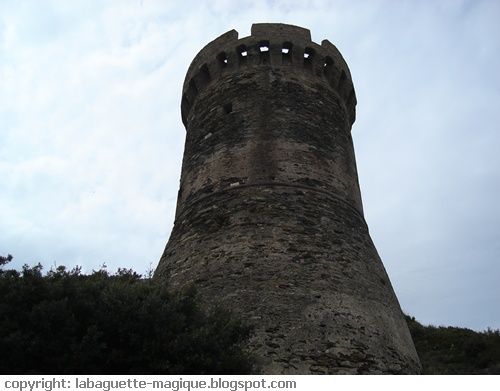
The relentless taming, shaping, claiming or reclaiming by man of most of the landscapes of Corsica helped sustain a pastoral and agricultural lifestyle, and testify the resilience of the local population, set against the influence of occupation, from successive waves of foreign rulers, invaders, friends or foes, and a spirit of protection against the dangers from the sea (the military towers that punctuate the coastline are a good illustration).


The (loosely-termed) Italian influence seems the most obvious one, but let us note more precisely Etruscan, Roman, Genoese, Tuscan influences, and remember that the island was even briefly under Neuhoff's rule (a German), and was also governed by English rule (1794-96). In passing, the ruined tower of Ste Marie (Santa Maria), at the Northern point of the Cape, is a result of Nelson's bombing it from sea!

Although I am familiar with only a small part of the island, namely the Northeastern part of the Cape, what I have witnessed here is a microcosm that encapsulates this pastoral and agricultural order, this organisational distribution of land. Although post-WWII modernity has brought more technological progress inland, it has also heralded the further erosion of the peasant/ fisherman society, echoing the decline seen elsewhere in Europe, and driven large expanses of cultivated land into fallow, before the inevitable shift: the land that once fed families and kept them on the island is progressively being turned into construction sites. When once upon a time a vineyard would have prospered on great grand-dad's piece of land, a house now stands, either built by our brave winemaker's descendants or by whichever family the descendants sold the land to.


In the sought-after areas of Costa Verde, Porto Vecchio, Calvi/ Lumio, and Ajaccio/ Propriano, construction on prime land has been more 'aggressive' as reflected by recent developments of hotels, shopping parades, apartment blocks, private or council housing estates, and villas, with promoters and end-consumers alike vying for that ultimate kick: the seaview, the exclusivity, the panorama, a snatch of your own private slice of paradise, from reasonable to hardly affordable... (to be continued)

28 May 2010

Born to be Wild (Part 2)

Besides, to those who are partial to a bit of wilderness in their garden, wild flowers are only invited guests of sorts, with conditions attached. Yet they tend to happen at the wrong time, wrong place, and be the wrong kind in looks or effect produced. In his quest for control and God-like omnipotence, man doesn't mind wild as long as it can be shaped into his ideal of wild.


Every Spring I used to have the privilege to welcome a couple of wild cardamine plants that gave my back lawn a touch of the prairie look in suburbia, but at the cost of causing a bit of a 'hindrance' too. Although I was happy to let the flowers blossom, at the same time I wanted the lawn to be mowed, especially after its 6 months of rest. I'd have to get out of my way to conciliate the flowers in the middle of the cut lawn.

Funnily enough I encountered the same dilemma with my daffodil bulbs (that I had previously planted, randomly, all over the lawn for that meadow effect). I could never quite wait until the total withering of the daffodils. I would lose patience over the constraints of a) the wild (cardamine) and b) the cottage garden look (daffodils). Wild meadows and the wild gardens recreated by man (using mainly cultivated crops) challenge the gardener in terms of geographical patterns, growth cycles, compatibility between neighbouring plants, soil composition and particular demands in terms of humidity or sun exposure levels. Furthermore, weeds, wild flowers and mad floral untidiness seem to be more at home (more expected) in the countryside than in suburbia, where tight rows of houses with handkerchief-size gardens command a fairly ermm urban approach to garden presentation.


Here at my parents' house in Corsica, you are surrounded with different stages of wild: the semi-wild fig trees and olive tree groves planted centuries ago, with some of them abandonned since, while others have produced rejects called oléastres that have gone to populate terrains and mingle with the indigenuous wild maquis of heather, juniper, strawberry trees, viburnum, green oaks, pistachiers lentisques, etc. The same applies to plants: introduced/ cultivated ornamental plants of the past (ex: irises, agaves) have now integrated to the environment with a life of their own. However others like the aptly-named griffes de sorcières (literally: witch claws) have spread in a parasitic fashion, impacting negatively on the local wildlife.

Now that I currently live in Corsica, my best daily walk with Tickle (my little dog) is not going to be down a man-made public garden, man-shaped park, managed forest or semi-wild canal embankment. Nature's magic unfoils unrestrictedly a few hundred yards away from my parents' house, down a path cutting through the maquis wilderness, a pleasant journey taking me through an ever-changing landscape of cistes, genista and strawberry trees, with floral enchantment aplenty from the eve of Spring to well into the Autumn: asphodel, euphorb, arum, wild orchis, convolvulus, lonicera implexa, scabious, rosa canina...

Tickle enjoying the Corsican maquis...

The best garden, the one that could ever bring me so much pleasure doesn't belong to me, it belongs to Mother Nature! Every plant has its place, its role, its shining moment, and in this harmonic symbiosis the weeds of our top paragraph have no or little existence... Only when there is an imbalance does a plant take over like a tyrant. The same applies to our human society, think about it.

Born to be Wild (Part 1)

Let us remind ourselves that weeds are wild flowers/ plants. But to gardeners and garden lovers, they are seen as pests rather than elements of the wild order: they are the unwanted wild invaders. They are invasive, intrusive, parasitic, resistant to disease and repeated pulling. Also note that they tend not to be pretty in looks; actually it seems that the uglier/ the pricklier, the least tolerated they are. Think of brambles, nettles and thistles.

Daucus carota

Left to their own devices weeds will thrive, take over your garden, ruin your lawn, suffocate your borders, create havoc in your carrot beds, infiltrate your paving, climb over your fence and harbour a quantity of unsavoury characters, from roadents to roaches...

If I ask you to name a few weeds, I expect you'll list dandelions, bindweed, shamrock, brambles, nettles, thistles, ivy, lychens, certain creepers and grasses and a few others. Some will include the likes of renuncula, daisies, forget-me-nots and fern (understand: 'unwanted, unplanted plants that just happened to appear in my garden, against my will'). Some of you may even add those introduced/ cultivated species of late that have now spread onto canal banks and railway tracks: Japanese knotweed, budleia, etc.

Wild asphodelus

On the other hand, what is perceived as wild flora belongs to the botanist's realm, not that of the weed killer/ pesticide/ fungicide conglomerates. Wild flowers are studied, drawn, photographed and talked about in books, not mercilessly tracked down and eradicated; their rarest elements are protected as part of ambitious programmes of public awareness and habitat preservation. Wild flowers depict a romantic tableau of charm, beauty (even cuteness), authenticity, tolerance and acceptance. In terms of visuals, Heïdi's Swiss Alpine plateaux, or the setting of 'Little House on the Prairie' come to mind. Wild flowers are associated (but not limited to) edelweïss, digitalis, orchis, gentiane, campanula, saxifragia, fritillaria, etc.

Wild cistus

The boundary limit between weeds and wild flowers is often blurred. And both are a bone of contention for the gardener: the former are cursed and tracked down like sworn enemies (using traditional tools or the final solution of chemical warfare) while the latter are a mixed blessing (depending on the gardener, they can be cursed, tolerated, or a welcome addition). (to be continued)

21 May 2010

Treats of Nature (Part 2)

In August, exert caution with wild fig trees; probable rejects from a nearby cultivated fig tree, their fruit can cause stomach upset and it is therefore wisest to resist temptation. Semi-wild fruit trees, allegedly abandoned gardens and neglected fields may be an invitation for a quick snoop but bear in mind that in most cases there will be a land-owner somewhere down the line. In the adjacent piece of land to my parents' house is a lemon tree whose fruit is literally left to rot... It also happens to have an owner who shows no interest in it, although being involved on the land to some degree. We wouldn't dream of tiptoeing across the field to steal (hmm yes that is the right verb!) the unwanted fruit. Unwanted fruit also happens to be trespassers' forbidden fruit!


Meanwhile nature has enabled a wide array of cultures that defy imagination, some of which verging on the obscure to the non-initiated. Mémé's family used to have a mulberry tree, originally from the Far East, whose fruit provided for jams. Nearby was a carob tree (carob pods are used in baking as a substitute for cocoa and as a thickener; and in medicine for their constipative virtues). My family also relied on the fruit from the medlar trees (another exotic import onto the island) and the jujubiers (ziziphus, what a funny name!).


On the heights of the hamlet I just about remember a graceful almond tree (which by the way we didn't own) - that graced the scenery like some Japanese estampe. My ancestors also cultivated (organically, which was the norm back in the day for the local peasantry) pears, tangerines, cédrats (variety of lemony citrus that goes by the name of Citrus medica and that is either crystallised or distilled into a liqueur), figs, vineyard, olives, capers, broad beans, tomatoes, early Jersey-like potatoes and much more. Some of our ancestors who emigrated to Puerto Rico took the cultivation gene with them and set up a coffee plantation.

Elsewhere on the island, cultures include pretty much everything under the sun (except for the more exotic produce): leeks, artichokes, courgettes, aubergines, cucumbers, onions, basil, lettuce, Swiss chard, melon, watermelon, apricots, plums, cherries, nectarines, kiwis, apples, grapes, oranges, Sharon fruit, walnuts, chestnuts, hazelnuts, etc.


As for humble me, my green possessions on the island are so far limited to a peach tree - that I have grown from a stone and whose fruit - deep orange flesh with ruby red splatters - is so incredibly fragrant and tasty, no other peach tree compares - of course I happen to be biased! I do plan to increase my cultivated stock, at this stage still contemplating as whether to embrace the wild flower and ancient fruit and veg variety conservation route, or take the more travelled - mainstream - road. Time will tell and I will tell you.

Treats of Nature (Part 1)

Corsica may be bathed by the Mediterranean wonders of blue yonder, its configuration as an island exposes it to extremes of climatic elements. These include the winds (no less than five breezy gang members and familiar visitors to the Cape, called Mistral, Tramuntane, Libeccio, Grégale and Sirocco) who are known to make a racket down the shores and break different degrees of havoc (dislodging loose rocks off the cliff face, uprooting trees, propagating forest fires).


Beware the so-called mild winters, for temperatures are known to sink below 0°C, with a crafty frost to drive you round the bend. With its elevated Alpine altitudes, the centre of the island boasts a couple of ski resorts that emphasise further the diversity of activity offerings. As for Summers, they take heat to high levels and carelessness could land you into hot trouble, health-wise!

All of the above criteria are bravely embraced by the indigenous vegetation of Corsica. Plants here are not allowed to be shrinking violets! They need to be harsh, resilient, resistant, adaptable to meteorological variations, preferably well-rooted, with no drink problem and a liking of rocky terrains... You will find enchanting alpines, carpets of succulents, rampant grasses, thorny ivy, spiky bushes, prickly shrubs, stocky trees, a vast majority of evergreens, thick leaves, robust trunks and dense wood aplenty.


Beyond its apparent roughness and rusticity, the nature of Corsica is also generous and reveals edible treasures all year round, some of which even boast medical properties. The lychee-resembling fruit from the arbousiers (strawberry trees) matures just in time for Christmas for the eponymous jellies and jams. In February/ March, thin yet incredibly aromatic stalks of wild asparagus found in the undergrowth will ravish palates. Wild leeks are another delicacy (the cultivation of leeks in the Cape is fairly recent). If your idea of a green salad revolves around iceberg lettuce or lollo rosso, it is time to go wild with native varieties of plantago, radiccio and dandelion.

Amateurs of aromatic herbs will be particularly rewarded by the rosemary clumps found on exposed rocks. Wild thyme, mint and marjoram are harder to locate, but the effort is worthwhile as their intense flavour and  taste will make you disregard the shop-bought dried varieties. Just make sure not to pull roots or take away more than a couple of twigs. Nature may be generous but its generosity is within limits!

Do not be fooled by ferula's resemblance to fennel!

Fennel stalks that mature in the Summer are commonly found on banks and grass verges and fill the air with a sweet aniseed aroma, reminiscent of the Pastis apéritif. Angelica is another treasure: my ancestors used to infuse its stalks into a liqueur; whereas candied angelica will add a little 'je ne sais quoi' to the most trivial fruit cake (a welcome alternative to raisins, currants and candied cherries). Meanwhile myrtle, a fragrant maquis* by-product, is distilled into a liqueur that symbolises the spirit of Corsica, quite literally!

* The untranslated word maquis will regularly occur in my blog. It specifically refers to the Corsican scrub: thick dense evergreen shrub vegetation that doesn't exceed 2 metres in height. This wildlife haven is mostly found in the island's coastal and sub-alpine regions. It is colourful in Spring and aromatic in Summer, diffusing that distinctive fragrance that epitomises Corsica beautifully. (to be continued)

17 May 2010

My Californian Psycho-Babble

In no particular order, stressful life upheavals include mariage, parenthood, divorce, redundancy, moving house and death of a loved one. When relocation implies moving abroad and starting a completely new life away from the familiar boundaries of the comfort zone, stress levels are guaranteed to shoot up through the roof (on a par with the adrenaline kick) to attain new heights and test your endurance. In other words, no matter how appealing the prospect of a new life abroad seems, the process is no plain sailing, although - should you be able to afford it - assistance from professional relocators (as seen on TV documentaries) will provide countless benefits!


Source: Museyon, 21/07/10

The end result though is supposed to be worthwhile: you will embrace the potentialities of life, while being stretched onto a journey of self-discovery, through the tortuous paths of self-doubt, with self-imposed patience, discipline and focus dominated by an iron will to succeed, without forgetting your saving grace: a good dose of self-deprecation in the face of adversity.

I first moved abroad, to Britain, slightly over 16 years ago. An idealist, I had nothing to lose and everything to gain. I was young and keen, straight out of university, and willing to have a go at things, take a risk, find out more about my capabilities and make a name for myself, away from family pressures and expectations. Looking back - and from a comfortable emotional and geographical distance - the journey of self-discovery was probably worth it, but the road to survival was paved with a number of material and logistical difficulties that hypothetically - in my mind - might have been softened if I had chosen to stay put, in my country of origin, whose quirky ways and turns I would have been familiar with from the word 'go' (or so I thought), and whose crippling Kafkaian bureaucracy I would have breezed through in a song (or so I thought).


Source: Garance Doré, Une Vie à New York

Soon I developed a black and white appreciation of sorts. If things in my life were good, I loved Britain; if problems cropped up, I blamed Britain. The relationship went beyond the 'like-dislike' rapport, it was more of a Liz Taylor-Richard Burton relationship: love-hate and consuming. And France was never going to be the solution to this, because by then I had sussed out that if geography merely influences the general state of mind, it does not provide answers, respite and happiness, as personal issues and the grander ones such as 'the meaning of life' run deeper. If you are not happy in your life, within yourself, no matter the place on earth, the solution will have to be found within you, not on the outside.

To those of you contemplating a move overseas in order to start a new life, my humble advice is that it shouldn't mean running away from any existing problems, emotional luggage or dissatisfation in life. You should start your journey with that simple question: what is my reason for leaving? You should also be realistic: how much of a new life will you be able to afford? The dream place comes with a gilded price tag! The good news is that Britain's high cost of living should have already prepared you, and the sale of a property bought in Britain will stretch you further when translated onto the foreign property market (unless you are vying for expensive countries like Japan or Iceland, or keen to move a few notches up the property ladder). However if you start a new life abroad with no collateral (like I did when I moved to Britain), be prepared for the hard graft!


Rewind 16 years and in December 2009, I embarked on a (not-so-familiar-anymore) journey, a one-way trip back to the motherland, this time with my English partner and our doggie companion. Moving back home should have been easy-peasy-lemon-squeasy, but what if, after 16 years, home didn't feel quite like home anymore?

30 Apr 2010

The Simple Life

Sincere apologies to my fan club, as I never imagined that my moving abroad would mean I cease all communication on my blog for over 4 months! Mind you, I had anticipated a couple of weeks of 'twilight zone' disruption maybe and then hoped that - come the New Year - I would come unstuck, settled in my new life as a continuation of the good bits from the old life. Maybe that's where I got it wrong: because despite taking elements from the old life, a new life is a new beginning and things are bound to go bump in the night, go amiss, go walkies, and bananas...

The Port of Nice, French Riviera

Just allow me to put you in the picture. Although it has been 4 months and I have been itching to write to you the minute I shut down my computer back in England, I am still virtually living out of a suitcase. All of my precious belongings are locked in storage, and I have been missing that very last frontier of man: my own space. My partner, our canine boy and I have been living at my parents (bless them) since that fateful day in December and tempers from all parties concerned have now been tested to their limits and stretched to the point of snapping.

Our move hasn't rhymed with smooth. We have encountered delays, breakdowns and meltdowns, and are still recovering from a particularly unforgiving winter (which involved an epic drive from the North West of England to the South East of France; where a snowboard would have been more appropriate than good old Romeo!).


Technology (or the limited/ lack of access to it) takes us way back to pre-Y2K. Our internet access is relayed via cybercafés (and I have only managed one monthly visit so far!), involving an hour's drive down a coastal (albeit scenic) road, exposed to the elements and the unpredictabilities from the sea, negotiating bends and precipices and generally jeopardising one's life with every turn. My own computer is locked up in storage like a naughty schoolboy, and I miss it like crazy sometimes (and its multiple functionalities that kept my life simple, clean and connected). Hence for now, while I cannot access it, I will have to keep the format of this blog (including photography and add-ons) bare. Moreover passwords, keycodes, account logins and pin numbers seem to have been erased from my brain's hard drive the moment I set foot on the island and it's taken me ages to recover most of them.

In other news, I've climbed the Annapurna heights of bureaucracy (from both sides of the Channel, may I specify). I have juggled with my finances like a circus act, and felt a right clown at times! I've checked my rights from my wrongs, dotted my 'i's and crossed my 't's, found my feet as I lost my head, explored windows of opportunities and looked for common ground with the local folks. I've given up looking my best, an impossible feat when you live in the countryside in a hands-on sort of way. You end up covered in scratches, nicks, muck, dirt or insect bites. Nobody important will see me (and you guys can't see me!), so frankly, who cares?


I've waxed lyrical about the benefits of orderly queues, timeliness, civilities, good service and careful driving. I've despaired at the taste of bad coffee like this is all a bad hangover, I'll wake up tomorrow and everything will be back to its normality: the soothing Mancunian rain tapping down my patio door, while my little dog is curled up at my feet on our cream sofa, as I am about to embark on an evening of light TV entertainment after a day's work at the office, and rip open a pack of my favourite M&S treats... Just me, myself and the dog, in that elusive instant captured in the comfort zone: not a care in the world...

And this was all given up in the name of the simple life...

5 Dec 2009

Any More Clues Anyone?

As indicated in my previous post, La Baguette Magique is about to embark on another life-changing journey which (sic) ‘will uproot us from the relative familiarity of our base in the North West of England for a road less travelled, slightly off the beaten track, two seas and hundreds of miles away’.

Our mini-adventure will start off as a 3-day road trip across a variety of landscapes, from the Cheshire plains down the M6 corridor, southeast-bound for the white cliffs of Dover and across the English Channel onto the European continent…

Thank you 'berry' much to my pretty garden!

Another clue, added on Twitter on 1st December, divulged an idea of the geological relief which our final destination will encompass: ‘mountain and the sea as horizons, a palette of blues that won't give you the blues... A traditional setting for a holiday!’ By deduction (and with a little guidance from the writer!) we may well be talking blue skies set against a coastal and alpine landscape.

Taking this information on board, our next and final clue will praise the merits of the cooking of this particular region: earthy and simple, yet the top notch of comfort food, where a strong Italian influence holds pride of place. It will deliver one of the best pancetta the carnivorous amongst you will ever sample, but don’t forget sunshine staple items like the remarkable tomatoes, peaches, apricots, citrus fruit and olives… And if you are familiar with this blog, you should be able to guess my mystery destination without much difficulty! As for the rest of you, now may be the time to revisit and re-acquaint yourself with my earliest articles…


The first person to give me the name of my mystery destination will win a 3-month sponsorship deal, with link-up to their own blog/ website/ Twitter site prominently featured on La Baguette Magique, with additional Twitter buzz and promotional features! Closing date for entries is Monday 14th December at 11:00pm GMT*. Good luck!

* {The competition is now closed.}

28 Nov 2009

Sails Out!

If you like surprises, here’s one that I have kept hidden from you for a little while, yet feel that now is the right time to reveal… My partner, our little dog Tickle and I are about to embark on the next leg of our journey in life, which will uproot us from the relative familiarity of our base in the North West of England for a road less travelled, slightly off the beaten track, two seas and hundreds of miles away.

We are excited about the adventure and understandably slightly daunted too. You will certainly agree that moving house is an upheaval in itself, but when this also involves the proverbial change of direction – encompassing change of jobs, lifestyle, scenery and surroundings, the prospect takes a new dimension.


The decision to move was not taken lightly, however we had been contemplating the idea of novelty, of starting a new chapter rather than follow a slightly worn script. We wanted to feel excitement and anticipation again rather than keep stuck in a rut that we were begrudging.

Undoubtedly, and without falling into the old cliché mode, we will miss some aspects of our current lives, some of the comforts and assurances they provide. On the other hand, if you seek change you have to welcome its challenges too!


In the next few days, I will be revealing little clues as to our destination. For now, I’ll just mention that it’s not Sedona, Arizona (a long story)… Anyhow, how could this be as I mentioned ‘two seas’ earlier, didn’t I?

As for our recently freshened-up house whose photos I have posted on the blog, it will be rented out through a property agency. The sentimental side of I hopes that the tenant(s) who will succumb to its charms will take care of it like it’s their own little nest.

22 Nov 2009

Winter Comforts

For those of us who live in the northern hemisphere, in places that are not blessed with the mild climate of California or North Africa, Summer is slowly turning into a distant memory, making way for the long Winter months ahead, spearheaded by the sparkle of the Christmas season that will fleetingly cast its glow over those long sultry nights to come…

Despite this, Winter is generally a drab affair between the bad weather and the shorter days, cutting short one’s enjoyment of the garden and most outdoor pursuits, and intensifying SAD (Seasonal Affective Disorder). Nature goes into hibernation and so do we, in a way, seduced by nights in rather than nights out, and gorging our way through carbohydrates and a number of forbidden treats, the foods that comfort body and soul!

Bakewell, Derbyshire

In north-western England, Winter 2008-09 was a drag, in particular Jan/ Feb 09, when we suffered weeks of frost and black ice in a way I had never experienced in my 15 years’ residency in the country! I remember vividly slipping down the pavement in a spectacular manner, while walking from my car to workplace. As it happened, one of the local residents had had the not ingenuous idea of pouring hot water onto their car to defrost it and the water had quickly set into lethal ice!

Some of those early mornings were spent battling with the car door that was closed shut by the ice, then having to negotiate those deadly bendy roads around the estate that the City Council seems to overlook whenever road gritting is required… The climate situation inevitably put a strain on the major road infrastructures too, with traffic delays, accidents and car batteries giving up the ghost! Let’s just say that the start to the working day was a tad frayed for the unfortunate commuter!

Bail House Tea Rooms in Lincoln

However one would ‘miss the point’ if they only chose to remember Winter for its predicaments, for there are enjoyments to be had, providing of course that you are fortunate enough to afford the basics of comfort, like a warm home and a balanced diet. In my book, Winter is a state of mind:

  • Winter is a time to clear the dead wood, quite literally, from the garden and your life. It is a time for introspection, it makes you take stock, and gives you time to think, about the physical and emotional clutter in your life, about things that need doing around the home and garden, and about the more metaphysical matters, if you are so inclined.
  • Winter also makes you appreciate what you have and may be taking for granted, like the comfort of your home.
  • Winter is an excuse for rallying the family around the fireplace and play a board game, join in a discussion, or light-heartedly share food, drinks, memories or good old gossip, cosied up on the sofa.
  • Winter is an excuse for self-indulgence that goes beyond chocolates: candles, a warm bubble bath, your favourite book or film, something that will lift your spirits and make you appreciate your own surroundings, your own company and that of your closest and dearest.
  • You need to experience the cold in order to appreciate the warmth! Brace yourself and go for a long countryside walk with your partner/ children/ dog. Then reward your bravery by going down to one of those cosy country pubs/ cafés and enjoy your favourite beverage, and – why not, a slice of cake or pack of nuts – comfortably sat by the fireplace if possible. Reminisce the moments of the walk when you were cold/ fed up/ tired: satisfaction guaranteed!
Bail House Tea Rooms in Lincoln

And if there is just one point to remember from this essay, this is it: like the Yin that only exists through its Yang opposite, Winter makes you appreciate Summer. If it were forever Summer, you probably wouldn’t be appreciating its glories as much!

21 Nov 2009

A Taste for Design

Dear friends and followers, I am delighted to reveal that I will be releasing my second blog in early 2010. This new venture will concentrate purely on design, involving visuals gleaned from the ambient world.


As a teasing taster, I thought I would include these two very Warhol-esque photo compositions from Agatha’s latest catalogue (AW 09). The French jewellery brand is celebrating 35 years at the cutting edge of high street fashion and recreating popular styles from the last 3 decades as homage to its own success. There is however a dominant edgy late 70s - early 80s feel to the retrospective, in an East Coast kind of way, with a neat British influence (Roxy Music, David Bowie). The mood is clubby, sleek and sophisticated, heralding the next step up from the dust of disco into an era of New Wave, with a sharp palette of black, red, white and silver.


Photography: Thierry Le Goues

20 Nov 2009

Piccolino Salad

This is a salad favourite which I re-created after dining at Est Piccolino, a Knutsford (Cheshire) restaurant, over 8 years ago. As I couldn’t remember the exact name of the dish, I named it after the restaurant where I had it that very first time, as a tribute.

The quality of the ingredients will influence the taste of the salad, therefore the best you can afford, the more rewarding it will be for the palate!


Serves 2 as a main course/ 4 as a side dish
Preparation: 10 mins
Cooking: 8 mins

  • 3 slices of French baguette, slightly stale
  • 100g of good quality organic pancetta, cubed, or 4 rashers of good quality organic streaky bacon
  • 3 cloves of garlic, peeled and finely diced
  • Extra virgin olive oil
  • Half a ripe medium avocado
  • Juice of half a lemon
  • 100g of mixed salad leaves (baby spinach, lettuce, rocket etc.), rinsed and drained
  • Salt and pepper to taste
  • Chopped chives to garnish (optional)
Toast the bread slices on a medium setting to obtain a golden colour and a crunchy finish. Then with a bread knife, cut the slices in small strips. Heat the oil in a frying pan, add the diced garlic cloves and then the strips of bread, coating them evenly in the oil and garlic mixture. Stir frequently for a good couple of minutes until the bread has turned into croûtons (but not burnt!). Set aside with the garlic mix.

Meanwhile using the same frying pan, quickly fry the pancetta (or bacon cut in strips) until cooked and slightly crunchy to the bite. Set aside.

Peel the avocado, cut it in half and remove the stone. Then cube the flesh and sprinkle it with the lemon juice in order to prevent oxidisation.


In a serving bowl, arrange the mixed salad leaves, add the avocado cubes and lemon juice, the cooled pancetta and cooled croûtons (with garlic). Drizzle with olive oil and season before carefully combining all the ingredients together. Finally sprinkle with chives.

Time to tuck in, safe in the knowledge that this colourful salad will help you replenish your vitamin levels, and brighten up an otherwise dull November day!

19 Nov 2009

Choc-a-Block! (Part 2)

Yet you will find pure cocoa and traditional drinking chocolate safely tucked away in my kitchen cupboard. I mix them together in order to obtain the perfect balance between sweetness and bitterness, before adding to organic semi-skimmed hot milk for breakfast. Indeed, I have hot chocolate in the morning - not the evening - mixed with some unsweetened Swiss muesli to add sustenance to breakfast. This seemingly peculiar gruel sets me off for the day and wards off any food cravings until lunchtime (unlike popular brands of sugary cornflakes or the toast-and-butter/ jam combo which neither seems to fill you up for long!).


Chocolate bars are a fairly inexpensive and convenient way to treat yourself, either on the go or at home. My own taste in chocolate meets certain requirements: the cheaper brands that dilute the taste in no uncertain quantities of hydrogenated fats and sugar are snubbed. I generally prefer the ‘continental’ taste, described as being less sweet than your average confectionery brands and popular chocolate snack bars (although I will make allowances for those wafer-based favourites like KitKat and Blue Riband). The continental taste bars are mostly represented by Lindt, Milka, Green & Black’s, Divine Chocolate, and selected ranges by Thorntons and Hotel Chocolat.

By the way, sorry to disappoint (or pleased to reassure you!), but I am no chocolate purist (in the chocolate purity sense of the word), as I am not a fan of those 85% dark chocolate bars (although this is chocolate at its less adulterated form and therefore at its truest taste!). Ironically it may be because it tastes too much like real chocolate, an acquired taste after all!


On the subject of chocolate variants, a special mention however to pralines/ giandujas (found in Ferrero Rochers and Nutella!)... Again, did I mention anywhere in this article that I was a chocolate purist…

Onto the next level, I dispense with special occasions in order to justify my enjoyment of the more sophisticated side of chocolates, the ones displayed in presentation boxes, in their shiny foil or veiled in a cocoa, icing sugar or mocha dusting, teasing your eye with their lashings of packaging, secretive layers and evocative descriptions from the menu card… I will try to pace myself if I am in company but if, for instance, my partner randomly orders a surprise box that is ‘just for me’, I am afraid those treats will have signed their own death warrant the moment the box is deposited in my hands…

If chocolate is your weakness too, then resistance is futile! Give in to it because it is, after all, one of life’s little pleasures!

Find out more - brush up your chemistry: Neuroscience for Kids.

18 Nov 2009

Choc-a-Block! (Part 1)

I have a confession to make. There is a love in my life that has burnt a fire in my heart for as long as I can remember. This love is nothing to do with a quick burn-out affair, a fleeting passion that comes and goes with the seasons, or a reasoned affection. This love is more like a single-sided devotion on my part that will forever stay with me, leaving me appeased soon enough until satisfied again...

This is not Lord Byron enthusing about a lover, only humble I waxing lyrical over one of life’s little luxuries: chocolate, in rather hedonistic terms - I must concede (where’s my head at!) - but the word is as potent as it tastes, stirring emotions in me and bringing pleasure to my tastebuds and respite to my sanity!

Chocolate is synonym with food comforts, and one of those treats described as ‘péché mignon’ (the cute sin) in French, the bon vivant’s allegorical excuse for indulgence bordering on the deadly sin of greed!

Clockwise from top left:  Thorntons, Van Houten, After Eight, Hotel Chocolat

According to ancient Aztec/ Mayan beliefs, chocolate used to be the drink of the Gods, certainly of society’s privileged few, bestowing powers. Chocolate was also used as a trading currency. The moment Conquistadores got acquainted to this treasured commodity was pivotal in defining and refining a new chapter in Western civilisations’ gastronomy.

A complex chemical reaction happens in the brain when the latter is stimulated by chocolate consumption. Chocolate compounds encourage the increase in serotonin and dopamine levels, therefore triggering the well-publicised mood-boosting effect one experiences on consumption. Chocolate as a mind-altering drug – I hear you gush – is the truth in principle, with the added advantage that the effects are mild, safe and legal!


However chocolate is also addictive, and I am probably a good example of this dependence. Although Choc and I go back a long time (early childhood), for the last 10 years, I have probably had it one way or another as part of my daily diet and, as such, we could safely deduct that this is one of my staple kitchen ingredients, although the bar form tends to be found in close proximity to the sofa – for a very brief period only – before disappearing! (to be continued)

15 Nov 2009

Sweet Nothings?

Trendy cookery and lifestyle books and blogs, the press, TV programmes, celebrity/ pastry chefs, bakers, culinary gurus and food photographers, down to greeting cards and the baking aisles of supermarkets and department stores have one hot golden favourite in common, an embodiment of sweetness and all things nice! Devotees have fallen under the spell of ‘her’ cute appearance, whose contained sexiness they extol as if describing an aspiring starlet with an evocative pout, Nabokov’s Lolita or a promising teen idol that will never grow up!


Please let me stop you in your tracks before you aim for Le Grand Larousse Gastronomique or Julia Child’s recipe books, for my friends I am not talking about a feast of ‘haute’ cuisine, but a pâtisserie phenomenon that has taken sexy back to the baking tray, in a riot of delectable and covetable creamy and dreamy textures, frosted colours, all packaged up in innovative designs and all-round feminity and girly fluffiness that make this pretty young thing hot property in our principally visual world. It is a bite-size wonder of pure hedonism that pleases the senses: so easy on the eye, eyes devour it, yet so easy on the palate, one never suffices, easy on the fingers, no clumsiness involved, all-round easy with a touch of deluxe… To put it simply, beauty has turned into an edible art form!

These delicate wonders that sparkle and shimmer and unfold are like precious jewels, little phials of perfume, allegorical dressed-up Barbie dolls of the pastry world distilling their attraction and asking for abandonment and complete devotion in return… This little treat is loved across generations, a social, age and gender leveller, powerful yet seemingly fragile!


This is also the humble combination of butter, sugar, eggs, flour into sponge, revisited, sexed-up, nipped and tucked, adorned to the limits of imagination to represent a miniature (doll-like) version of what a ‘normal-sized’ cake would look like. Its girliness and abundance of (mostly) snow white, baby pink, lemon/ primrose yellow, almond/ mint green and silver take us back to childhood idealised, a world of safety and nostalgia, like candyfloss and the candy store….

Its visual appeal makes it a delight to film and photograph, a darling of the home designer and trend-follower. Its convenient self-contained format makes it perfect in our on-the-move, on-the-run world, and a perfect occasion piece as it stands on its own, stands out and can be customised and disguised to match anything, from the delicate ribbon in the bridesmaids’ hair, to the prom night theme…


Its popularity transcends the world, and its many combinations and associations in looks, flavours and textures make it a versatile act to follow! This little one may be easy to describe and easy to eat, and – to the detractor - full of hot air – all style and no substance! - compared to established pâtisserie classics, but the chance is we’ll never sample all of its varieties/ coating and filling variants, thanks to the limitless human imagination, and this trendy cake will soon enough become a pillar of bakery establishment and rewrite the rules of pâtisserie, to make it more fun and colourful!

As you can see, there is definitely more to the cupcake/ fairy cake than cute! And let’s thank the girls from SATC for putting Magnolia Bakery on our radar.


Photographic credits in this article:

Additional resources: