21 Jul 2010

Lettre à Ciaruccia (Part 2)

Way before funding a private pension became the norm, you were financing your own, but lost all your savings once the unscrupulous financiers from Marseille ran off with the coffers! This cruelly spelt a penniless retirement for you, but somehow you made do, thanks to your spirit of enterprise and support from your closed ones.


You amazingly were the last inhabitant in the hamlet. Only towards the end of your life, when approaching 80, did you relent to rent a room at a friend's house in the heart of the village in order to avoid being completely by yourself. Even then, you would walk the 3-mile return trip daily back to the hamlet to check your house was alright! I do not know anyone, young or old, who could claim your bravado, your courage and determination, with limited financial and emotional support and no modern means of communication.

Of all the difficulties that cluttered your life, the harshest of them all probably was when your much-loved nephews moved away, to the call of the bright lights: Augustin to Bastia, Ajaccio and then Calvi, while mémé (plus her husband and daughter) took the deep leap and moved hundreds of miles north, to St-Quentin. You knew deep down that they would never be able to sustain a living by staying in the region. Moving away was a necessity back then, unless maybe if you were a fisherman, a jack-of-all-trades builder, a doctor, a civil servant or a rich land-owner...


You passed away in 1962. By then, the world was already spinning into meltdown, mourning Monroe, orbiting towards the last frontier of space, splitting Berlin into two blocks, losing colonies and engaging deeper into the Vietnam war fiasco. The world was changing fast into something ever more alien to you and your contemporaries. The fabric of society, solidarity, agrarian Corsica (and the role of peasantry and land-ownership), were changing too into something you would have not recognised.

Although I have never met you, I miss you Ciaruccia and feel humbled by you. You were the salt of the earth that you cultivated all your life, a down-to-earth lady with infinite wisdom, courage and kindness, practical, hard-working, yet probably extremely lonely at times.

Despite all this you derived simple pleasures from everyday life, without being blasée or resentful. You saw goodness in everything and everyone. You were incredibly human, yet your self-inflicted working conditions were short of human.


It is a tragedy that our history books, press offices, libraries and collective psyche tend to only remember and praise kings, pharaohs, ministers, generals, celebrities and tycoons, when those who build the foundations of history and society are the little people like Ciaruccia, who busily glide in and out, in the background, out of sight, out of mind, weaving that incredible canvas that is indeed the fabric of our historic wealth and legacy.

20 Jul 2010

Lettre à Ciaruccia (Part 1)

Dear Claire, or shall I call you Ciara, even Ciaruccia (Lil' Claire) as you were affectionately known... A great-great-aunt I have never met, yet I think I have an idea of you almost to the point of claiming that I know you, thanks to other people's accounts of you, especially from mémé, my mum and the shrinking cluster of elderly family friends who are still alive to reminisce you.


I have come across the odd (rare) photo of you, a thin, petite energetic-looking woman with a scarf on her head who was anything but frail and fragile, for you accomplished so much in your humble lifetime, through hard labour and self-inflicted discipline. I have never met you, yet my eyes fill with tears at the thought of your fairly harsh existence with basic/ rudimentary comforts and no material luxuries. Yet what touches me most is that you never complained about it, you took it in your stride and carried on.

And stride is what you did! From the tortuous heights of the hamlet down to the sun-baked plains by the sea, miles of it in one day, every day, by foot or donkey-back! You tended to your vineyards (Malvoisie is the grape you produced), with no mechanical (tractor) aid in sight. You watched out for disease (mildew and phylloxera, the two main and incredibly feared culprits known to deplete a vineyard).


As if this was not enough, you made hay for your farm animals, checked the state of your boundary stone walls in passing, hacked back bramble and other keen weeds. You kept your fruit and vegetable garden in check, watered it, and your patience, faith and plant knowledge - passed down from generation to the next - helped crops to come to fruition and feed the household.

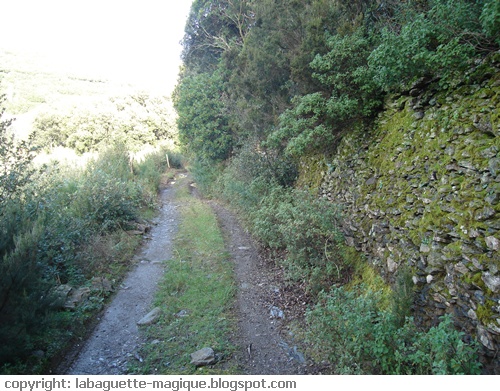
As way of council tax settlement, you volunteered to keep the road verges leading to your hamlet (a good kilometre of it) clear of rambling vegetation. It is said that you always carried a gardening tool with you, a knife, a clipper of sorts, with which you would cut anything that wasn't supposed to be at its place.


You had fun too, almost childlike with your adored nephews (mémé and her brother Augustin who virtually saw you as their second mum) and your only grand-niece, my mum. It seems that despite the harshness of your working conditions, out in the open, self-employed with no job security as such and with no guarantee of a decent wage, you nonetheless felt blessed by family life and the wider circle of village life (from church services to fêtes), although you never married or had children of your own, not necessarily your choice, as I've heard allegations that your brother Antoine (my great-grandad) discouraged any suitors from courting his only sister! Whether or not you would have had an easier life, should you have found a caring husband, we will never know... (to be continued)

19 Jul 2010

Smooth Lemon Sorbet

Approx 8 servings
Preparation: approx. 10 mins
Cooking: Bring to the boil + 5 mins
Cooling: 1 hr
Freezing: 4 hrs minimum

And now for an exquisite dichotomy: lemon and sorbet. Lemons are Winter fruit, while sorbets are traditionally associated with Summer. Here is my revisited adaptation of one of my mum's old 1970s 'Femme d'Aujourd'hui' magazine recipes, where I am more generous with lemons, discard sugar for icing sugar and omit the food colouring (big in the day!). The cream and icing sugar counteract the acidity of the lemons into a fondant and create a smooth emulsion that will smoothe out any childhood preconceptions about lemons and watery sorbets!


As always, I am spoilt for the quality ingredients. Left on the trees to reach maturity at their own pace, organic Corsican lemons are courtesy of Philippe, our old family friend. Besides I used filtered water for the sorbet (purists amongst you might even elicit mineral water).
  • 1/4 litre water
  • 400g icing sugar
  • 1/4 litre freshly squeezed lemon juice (corresponds to approx. 5 small lemons + 2 average-sized lemons)
  • 2 tablespoons whipped cream
Place a stainless steel sorbet/ ice cream mould in the freezer department. Pour the water and icing sugar in a pan and whisk together until the sugar has melted. Bring slowly to the boil, keeping an eye on the pan at all times, as the syrup must remain clear and not caramelise. From the first bubbles that rise to the surface, count 5-7 mins before taking the pan off the stove. A drop of syrup carefully placed on your finger with the tip of a fork must be sticky and well formed, and this will indicate the correct consistency.


Once the consitency reached, and the pan taken off the stove as a result of it, add the lemon juice. Quickly beat the cream with a fork before adding to the liquid. With an electric whisk, blitz the preparation to smoothe it; it will become very foamy (as per picture). Then leave to completely cool down (which could take at least a good hour), before pouring into the cold sorbet mould. Place in the freezer. The depth of the mould will dictate the speed at which the sorbet sets; the deeper the mould, the longer it will take. In my case, I used an 8.5 cm deep cubic mould.

Every couple of hours check the consistency and mash through with a fork to avoid the formation of crystals. Bear in mind that sorbet consistency is not as hard as ice cream. In my case, four-hour freezing time produced a soft consistency (especially once mashed through with the fork), perfect for scooping into cups.


However I chose to leave the sorbet overnight (i.e. for a total of 18 hours). In order to recreate the sorbet/ granité consistency, I scraped its surface repeatedly with a fork and scooped as such into cups. This is an elegant yet unassuming dessert, that needs no dressing, no presentations, no add-ons. It is thus best enjoyed au naturel. It provides a burst of freshness without the bitter after taste! Good clean fun indeed!

18 Jul 2010

Un Café à Bastia (Part 2)

My next secret address, L'Idéal is also at the back of the Société Générale bank, this time making your way down the Cours Pierangeli, and further down, heading for the Place du Marché, a little provincial gem of a square only a few yards away from the Vieux Port (the old fishing port). Straight in front of you, with the beautiful Saint-Jean-Baptiste church on your right, you will find the bar/ glacier, next to La Table du Marché restaurant.


Its discreet unassuming pale façade belies a tastefully decorated interior, small in size but incredibly charming. No doubt that the shaded terrace with its potted hydrangeas and quality wicker armchairs will equally tempt you, for an alfresco refreshment. But if you nip back indoors, you will probably get tempted by the marble cake and biscuits tastefully laid out in glass jars to accompany your café noisette (an espresso with a shot of foamy hot milk), reasonably priced at 1.2 Euros. Finding yourself in the town centre yet with this off-centre tranquility at the same time, you'll be able to take the town in, enjoy a breather and lose your thoughts into a daydream, while sipping a coffee... Which is what downtime should be all about.


If you don't want to miss any of the action, walk up towards the top of Rue César Campinchi, bearing left while heading towards the Palais de Justice (courts of justice). You will find Café Francesca: a haven of respite after all that shopping and strolling! Its contemporary design with soft clean lines, dominant cream tones softening the beautifully restored brick ceilings, and an inviting leather banquette, are bound to seduce you. Unless it is the inviting homemade mousses, creams and fruit desserts presented in glass verrines on show in the vitrine by the entrance!

For a break from the traditional, why not try one of the maison's herbal fruit teas? I recommend the Thé Bulgare (3 Euros), refreshing despite being served hot. Service is friendly and informal, and you will be tempted to linger and - who knows - by the light lunches (petite restauration) on offer, to be consumed either indoors or on the pavement terrace.

If you have transport, don't mind the bill, want a bit of bikini action and fancy indulgence with a definite holiday vibe, then you can push the boat out big time and head for Lido de la Marana, Bastia's closest beach resort (please note you can't walk there from Bastia town centre).


A short drive away from the hectic and congested RN193 (South Bastia's 'A' road cutting through residential suburbs, superstores and shopping parks) is a stretch of paradise sandwiched between a long sandy beach and protected marshes, aka the Cordon Lagunaire (laguna strip), host to Lido de la Marana and its welcoming Bar de la Plage, where a standard espresso will set you back 1.50 Euros (against the usual 1.0 to 1.20 Euros), but considering the exclusive view and jet-set undertones, you will understand it is quite cheap after all.


Comfortably sat on the deck over the golden combed sandy beach, with the Bastia coastline unfolding in the distance, and the protected marsh behind you, you will be able to get even closer to beach action (where loungers and parasols are laid out for the bar patrons). But before you take your kit off and take a dip, why not have a bite to eat, and prolong that Laguna Beach moment a tad longer...

17 Jul 2010

Un Café à Bastia (Part 1)

Take a walk on the safe side of café culture in Bastia with I - your guide - and enjoy a moment's tranquility without compromising on style. To do so, let the town take you in its stride, preferably on a cool Spring or Autumn day (the best times of year to visit the Corsican town). Start off quite early in the day, or make a move later in the afternoon, in order to avoid rush-hour traffic. The town centre is compact enough for you to walk around without difficulty. However wear good shoes so as not to spoil the fun to be had (some of the streets are steep). Take a wander down the pavements, go on a mini-adventure, safe in the knowledge that you can't really get lost in Bastia!


The town itself is quite narrow in depth, roughly contained between the commercial/ ferry port, the train station/ Fango quarter (administrative area), the Palais de Justice/ Citadelle axis (old town) and the unmissable Place Saint-Nicolas (the main town square). The town centre (bar the old town itself) is organised almost as a grid system, a bit like a town from the New World. The two main shopping arteries, Boulevard Paoli and Rue César Campinchi run in parallel and their selection of mainstream shops, exclusive boutiques, enticing pâtisseries and quirky eateries should be enough to satisfy the label-obsessed, the price-conscious, the speciality seeker and the style hunter.


If we have to start somewhere, where better than from the epicentre of town, Place Saint-Nicolas? The wide spacious palm-tree-lined square overlooks the sea. Napoléon's pedestal proudly stands at the centre of the square, while behind him an example of remarkable 18th century architecture is spelt out on the frontons of a row of imposing apartment blocks. Sitting at a terrace, you will be able to embrace the continental pastime of café culture like a native. Just wear your shades, unfold your newspaper, light up a cigarette (if you may) and take in the atmosphere.

The countless cafés/ bars mean that you will be spoilt for choice, but if you really need my personal recommendation, then head for Café de la Paix: it has been there for as long as I remember. If indoors its rich 1970s wood panelling and brown leather décor has lost some of its panache and is crying for an uplift, the café is nevertheless - I believe - the place to be, at about 7:30am, in order to take the pulse of the town, as office workers and businessmen stop in for their daily Malongo café serré (Ristretto) and a croissant. The café crème is decent, the croissants are generous in size and will set you off 'till lunchtime, while the café's atmosphere will be upbeat enough to fill you with energy for the day.

For a more tranquil vibe and a more modern setting, away from the hub of the square, I recommend a choice of two cafés. Café Casale (named after the aviator, Jean Casale) on the street of the same name is a small quiet café tucked away at the back of the Société Générale bank (Rue Miot, visible from Place Saint-Nicolas).


Its décor, lay-out and drinks menu show that its owners pay attention to detail and the experience will be bound to appeal to style-aware urbanites. And for that little extra touch, tea and Illy coffee are served in good old-fashioned vintage crockery. You may prolong your experience with a spot of light lunch there. (to be continued)

16 Jul 2010

Priceless & Homemade

There are some things that money can't buy. For everything else, there's card, cash, gold bars, Travellers cheques, or bank of mum & dad... The things that money can't buy include those little treasures, allegedly insignificant family heirlooms at large that risk a death sentence with the passing of every generation, memory-ladden hand-me-downs that appear so trivial to those outside the family circle, objects devoid of a price tag, a clear/ obvious monetary value benchmarked against carats, gems, the fine antiques market, artistic worth, art movement, exclusivity etc.


At least two of the three objects I am about to describe here are commonly found in old Corsican homes, including mémé's house, and sadly likely to be overlooked by the younger generations. These artefacts are likely to fare poorly in terms of hard cash on the BBC Antiques Roadshow, nonetheless they are priceless to me, for they embody my family heritage (and that of hundreds of other local households) in its most simple aspect: the humble testimony of a pastoral tradition, of everyday life like it would have been, in its bare simplicity. These objects may 'only' appear to be a disparate collection of wooden bits that some consumerists couldn't wait to relegate to the dustbin (or in a last minute bout of empathy sell off at a jumble fair), but they are likely to 'talk' to sociologists and ethnologists. And for me, their 'talk' is (familiar) music to my ears.


U Spurtellu: a small yet sturdy, rounded and perfectly formed basket, handmade using either myrtus or chestnut wood twigs. My grandma's spurtellu is, I reckon, at least 150 years' old and not a single grey! This little unassuming basket had a clear purpose back in the day (and mostly until just before WWII): used by land-owners and peasants picking olives from their trees, as the first process towards the production of olive oil. The spurtellu was also used as a measure, enabling these local/ cottage industry olive oil producers to keep track of the quantity of olives they had picked. Ingenious and simple, all the same! More recently our spurtellu has been used to bring back fresh chicken eggs from a cousin's garden, or to pick peaches from the tree. It also had its hippie moment in the 1970s, holding an arrangement of dried wild flowers!


Planche à Découper (chopping board): unfortunately I never asked my grandma for the Corsican translation of this mundane wooden kitchen utensil. This one however was clearly hand-crafted using local wood, as opposed to a run-of-the-mill smoothed-down version from the shops. Here you will notice the rusticity of the finished product, the pencil markings and the lack of symmetry of the curves. These imperfections make this unique piece even more endearing indeed! Despite not being a keen carnivore, I cannot help but wonder about all the beautifully fragranced tasty pieces of locally-produced meat that got carved on this block of wood by my ancestors, throughout the last century or so...


Cuillère Souvenir (souvenir spoon): an unassuming example of local decorative craft aimed at visitors and the very first tourists, and designed to be hanged on a wall. I am no antiques expert but would be tempted to date this piece back to the early 1900s. This one holds the particular merit of 'advertising' the village of Rogliano, indicating here some sort of exclusivity as it is quite difficult to find decorative artefacts with village names on. Finding vintage objects bearing town names like Bastia (see close-up of the trinket box, top), Calvi or Ajaccio is much more common. Sadly this little spoon has lost some of its curvature along the years, but in my eye it has retained all of its character and quirkiness. It used to belong to Claire, mémé's dearest auntie, and I would never dream of parting from it.

15 Jul 2010

A Cook in the Kitchen...

... and a maid in the parlour, that's my mum. She is extremely talented, holds the most challenging role at home, and - in the same breath - the least rewarding one. She is on call all day and gets no pay for it, never mind out-of-hours overtime. Her endless repetitive tasks conducted almost concurrently, daily and weekly household chores that seem to have only her name on, with her immediate circle not always giving her the appreciation she deserves. She is probably the most overlooked/ taken-for-granted individual in this very home, which is likely to make feminists out there cringe in horror. I think you'd get less for murder!


We are not just talking about the cooking, but also the laundry, ironing, cleaning, tidying, food shopping, bill paying, letter writing, nurturing, problem solving, life coaching and advising. She will also spend time in the garden, fix things around the home, deep-clean kitchen and bathroom, wax-polish furniture, keep abreast of current affairs and represent the family on various engagements. She will play the perfect hostess, entertaining friends and family with both conversation and meals devised by her from scratch. She looked after her mum - mémé - and her father-in-law in the last stages of their lives. She's opened her door to people in trouble, family, friends and even strangers. Years ago, she took time out to help with a local charity, visiting and providing moral support to socially- and economically-deprived families.

My mum will collect food recipes, cuttings, photos and articles about home design and house renovation (my mum should have been a library archivist!). She will furnish the home and clothe its inhabitants. She'll have an eye for detail and generally for anything that needs replacing, updating or buying in the first place. She takes it all in her stride, and carries on regardless despite fatigue, poor support and criticism from her closest ones (including from my dad). 'Why did you only buy one kilo of spuds?', 'Oh, I don't fancy a stew for lunch!', 'Could you not find me a better jumper than this one?'...

Yet she is so light-footed, discreet and modest, and she blends into her surroundings so well that a visitor would almost be forgiven for not noticing her. You would think that a magician conjures up order and spick and span around the home on her behalf while she just sits there with her Sudoku grids in front of an old re-run of Inspector Derrick... She could take time out and make time for herself but she doesn't. I think she would feel guilty about it. That's just the way my mum is. An old-fashioned self-abnegated, dedicated home-comes-first kinda mum. She is a rare treasure indeed and we are lucky to have her. She is a god-sent who holds the fabric of this household together, and we sure should show her more gratitude than we do.

Her qualities make up the CV for the perfect housewife; they lie in her resilience, patience, organisational skills, can-do attitude and creativity. She will easily spend three hours in the kitchen daily, just to cook, without batting an eyelid, without fuss. After all those years, she will still push her own limits by injecting some fun into her cooking, testing a new recipe, innovating with a culinary gadget, adding pzzazz to a dish... You have to salute her effort. In my eyes, she is part of an elite up there, she represents the crème de la crème of housewives. Meanwhile I'd love to hear from younger housewives who are a carbon copy of my mum, so that I can disprove my conclusion that my mum is indeed part of a dying breed of housewives.


My mum is not strictly speaking a child of the 1960s. She wasn't from the post-war baby-boom years, as she was born during the war, making her a child of the 50s, although she was in her twenties throughout the whole of the 60s. Her values were maybe more anchored in that 1950s mentality where homeliness, home order, home economics and tradition were more prevalent than in the liberal 60s.

Maybe also it was just my mum being my mum, strong views about the role of a wife and mother. Same with her female friends and age group contemporaries becoming adults in small working-class towns of Northern France (and elsewhere), who nurtured the same noble aspirations and ambitions around the home: to become a good wife, a good mum, a good hostess, to be proud of their home and family, to keep up with the Joneses in a healthy kind of motivational competition. No sloppiness, no laziness, no moaning. On top of it, these young ladies like my mum held jobs and some were embarking on careers. They would juggle it all, like my mum did, to a point.

Some things would have to give, but with my mum, she was the one who gave, she gave more of her time to her husband and children, to her home, to her cooking. It helped us (but probably not her) that she gave away her career for us, 18 years or so, so she could carry on slaving on the stove, up and down the utility room and around with the vac, while we'd grumble and criticise. I told you so: you would get less for murder!

14 Jul 2010

Two-Hour Twilight

One of the most striking of French 'oddities' encountered on French soil by the foreign visitor (or the native back home after years spent abroad!) will be the time and importance given to meal times, and especially the noon till two break, where everything comes to a standstill. I call this the two-hour twilight.


Bar the welfare depts that now tend to be open through lunch, local government institutions (town halls, municipal libraries, public baths, etc.), banks, post offices, civil service institutions (job centres, tax offices, préfecture, etc.), offices, surgeries, shop floors, shops and garages are all closed for the best part of two hours. Bakeries and grocery stores will tend to give a 30-minute window or so, enabling people straight out of the workplace to buy their baguette or last-minute essentials before heading home for lunch.

Yet, sign of the changing times (and a blessing for some customers), most branded chain stores and supermarkets will be open. And of course so will cafés and restaurants, only too pleased to capitalise on the opportunity to cater for the stranded workers on their daily two-hour lunch break but unable or unwilling to nip back home for a quick bite and a nap.


In some areas of town, this extended lunchtime break can spell tough luck for employees, especially if there is no canteen, the local amenities are closed, and you rely on public transport. What do you do with your time? Once again you cannot exactly run errands or catch up with personal paperwork, if this involves a trip to the local bank. You can always do some of it by phone, I suppose, that is if you are indulgent of call centres, and they are able to assist with your request.

Although I approve of the importance of proper breaks, especially from a worker's viewpoint, I am wondering whether it wouldn't be more beneficial for all parties concerned (workers, customers, the general public) and for business if, while retaining the format of the two-hour lunchtime break, the workplace actually remained open for business, but employees took their break in turn.


With this 'business as usual' formula, like we have in Britain, service is uninterrupted and everybody gets served. Company employees and customers alike can get things done at lunchtime, whether it be personal errands or business dealings. And the business benefits too.

But maybe where I am missing the point altogether is that the French two-hour lunch break is a sacrosanct tradition, and that it should be seen for what it means in the first place: purely dedicated to meal time, food and rest. My perception is probably altered by the fact that I have lived in England so long, I have become more pragmatic and rushed off my feet than my French counterparts!

12 Jul 2010

Hey Mr Baker!

A few weeks ago, just before Spring, my partner embarked on a bakery course at the local Centre de Formation d'Apprentis (trades college). Originally this was no concerted option, more a decision that had been thrown upon us, with the risk of luring us away from our focussed business ambitions. But with setting up a business not exactly the right time for us, we decided that this might be a useful diversion, a possible door-opener too. And this is how my partner became Mr Baker...


I personally harboured doubts about how beneficial a choice this would prove to him, expecting him to jack the whole thing in (although all along the temptation to do just that was at the back of his mind). Yet fairy(-cake!) godmothers bestowed him with blessings:
  • A friendly, approachable and passionate tutor, a former baker from Marseille who had the gift at communicating his knowledge and enthusiasm to his students;
  • My partner was part of a small group of friendly adults who too were trying to find their feet in a changing world and were retraining as a result; and finally,
  • When doing his on-the-job training he was lucky enough to find himself under the wing of not merely a baker but a highly experienced pâtissier with prestigious international credentials who had nurtured his skill in top London hotels, French embassies of the Middle East and high-end pâtisseries.
  • With the pâtissier my partner would not only learn a few tricks but also appreciate the reality of the world of pâtisserie, observe the processes in place, learn to be organised and methodical, go 'wow!' at the magic and unfold some of the little trade secrets that make those delicate pastries and gâteaux endearingly pretty. He would 'mettre la main à la pâte' (get involved) in the viennoiserie side of pâtisserie: croissants, almond croissants, pains aux raisins, pains au chocolat, pear/ apple tarts, mushroom tartlets, croquants (cantuccini biscuits, pictured below), canistrelli (Corsican biscuits), etc.


I am impressed and proud of him for, not only is he faced with the daily challenge of trying to communicate in a foreign tongue he had virtually no knowledge of six months ago, with minimum support, missing out on the subtleties, and battling with grammatical absurdities, he is training in a field of activity he had no prior knowledge of (or prior inclination for, in his own words). Before now, his closest exposure to baking had been by his making scones from scratch (of his own accord, this was), casually watching me bake the odd cake, or wandering down the bakery isle of a British supermarket, not exactly catalysts for a career in baking.


At the end of the day, if the 8-month bakery training, compounded by early rises, unfriendly hours and the repetitive bread-making action, doesn't necessarily convince my partner to embrace the career, or encourage him to follow this up with further training - this time in pâtisserie as the logical next step - it will at least have given him the basic rules of baking, and hopefully a taste for baking in our kitchen.

This will also have offered him a valuable insight into probably the most celebrated of French culinary traditions: the world of boulangerie - pâtisserie. And how best to understand the workings of a country than by getting an insight into what makes it tick, i.e. by getting under its skin, or - rather - under its pastry lining?

11 Jul 2010

Very Strawberry Sorbet

Approx 10 servings
Preparation: 10 mins
Cooking: bring to boil + 5 mins
Cooling: 1 hr
Freezing: 4 hrs minimum

With strawberry season in full swing, I wanted to pay tribute to its unadulterated taste and was of the opinion that only homemade sorbet would achieve this true simplicity of taste. I wasn't going to fall prey yet again to offerings from high-street glaciers (ice-cream parlours) that use fruit syrups, canned or frozen fruit as the basis to their pur fruit concoctions...


Also once you get mass-market sugary ice-creams, tasteless watery sorbets and fluorescent slush puppies out of your system, you are bound to yearn for the back-to-basics homemade frozen desserts, the ones that combine only 3 ingredients like this one here, and where fresh fruit operates its magic of taste and form, with no room for colourings, preservatives, flavour enhancers and general kidding around...

For the sugar syrup, I used 'crystal' sugar, a white caster sugar used for jam making which, through its pectin content, will prevent the formation of crystals in sorbets and ice-creams.
  • 300ml water
  • 500g granulated sugar or icing sugar
  • 750g strawberries
Place a stainless steel sorbet/ ice cream mould in the freezer department. Start off by making a clear sugar syrup. Pour the water and sugar in a pan and whisk together until the sugar has melted. Bring slowly to the boil, keeping an eye on the pan at all times, as the syrup must remain clear and not caramelise. From the first bubbles that rise to the surface, count 5 mins before taking the pan off the stove.

A drop of syrup carefully placed on your finger with the tip of a fork must be sticky and well formed, and this will indicate the correct consistency. Also the surface of the syrup will show a very slight mottled effect (as if a very thin sheet of cellophane has been deposited onto the surface).


Once the syrup consistency reached, take the pan off the stove and let the syrup cool down thoroughly. Meanwhile wash and hull the strawberries, put them in a blender and blitz until they have completely liquefied. Filter the strawberry juice through a thin sieve to rid off grains and bits. Discard the grains and bits.

Add the smooth juice to the cooled syrup and mix together before pouring into the cold sorbet mould. Place in the freezer. The depth of the mould will dictate the speed at which the sorbet sets; the deeper the mould, the longer it will take.


From the moment the sorbet has just about set, start mashing through it with a fork every 2-4 hours or so to maintain a soft consistency, bearing in mind that sorbet is not as hard as ice cream.

Once you are ready to consume your sorbet, mash it through again, and roughly fashion scoops between two forks before placing into serving cups. Serve as it is. The unadulterated taste of strawberry will talk for itself and spellbound you and your guests!

2 Jul 2010

An Attention to Detail (Part 2)

Attention to detail in rusticity is exemplified by mémé's house. Spread over three floors, it demonstrates church and castle engineering transposed to the private humble home, with a medieval vault structure supporting the whole weight of the house and deployed over a steep public path, using noble materials like oak and chestnut beams and stonemasonry. A challenge back in the day, and still a challenge today as no concrete casts, supporting steel frames or breeze blocks are used! This will baffle many a savvy modern architect, no doubt!


As if this was not enough, mémé's house also boasted until 50 years ago a fully-functioning built-in bread oven (alleged to be as ancient as the multi-century-old house) and tiled terracotta surround. Furthermore the property is flanked by its own private stone pavement. It also has a granary and an attic, a dispenza (larder), three fireplaces (the one in the kitchen was used to smoke pork meat into ham), a separate kitchen building linked to the main house itself via a puntu (bridge), two panoramic terraces, two functional cellars (one for wood storage and one for wine-making, complete with stone basin and oak barrels), a chicken pen, a pigsty consisting of a stone shelter built underneath the public path and an open-sky pig yard, a small terraced garden, and three olive trees immediately below the communal path. Thick stone walls and solid wooden floors are defacto, while chestnut windows and French windows are fitted with their own inside shutters, to keep the house safe and cool.


This is a perfect example of a self-contained property, an average peasant/ farmer family dwelling that over the decades/ centuries got improved upon, updated and enlarged to cope with the changing times. For instance, in line with a design trend of the time, one of the downstairs rooms has a beautiful ornate plaster ceilling that was stencilled in 1907 to commemorate my great-grandparents wedding, and has not been touched up since although it is now - sadly - severely damaged. The house was electrified in the 1950s by a family member on holiday from his high-ranking post in Marseille docks: he did a very neat spot-on job, that would shame our so-called electricians out there!


A cosmetic detail: my mum's D.O.B. immortalised on the façade by my grandad

For this is what I have noticed: back in the day, masons, builders, carpenters, roofers, skilled/ unskilled tradesmen and even amateurs/ rookies seemed to make a point at producing quality work, not any of this sub-standard lark that we have come to expect or get accustomed to nowadays, with shortcuts aplenty, poor materials, cheap imitations, and loads of cladding, panelling, plaster-boarding, lashes of paint or glue, staple-gun action and falseties to hide a multitude of sins in minimum time and effort... That attention to detail and pride in a job well done are an aberration for some! The building trade shouldn't be that charade, the lottery it has turned out to be, as - using Forrest Gump's famous words - 'you never know what you gonna get!'


I have been appalled at the extremely poor quality of work and motivation levels of those (albeit self-employed) tradesmen I have personally dealt with. A case of bad attitude, poor habits, lazy quick-fix methods and often not an ounce of common sense! While I'm at it, I would be extremely tempted to publicise the rogue Stockport plumber who carried out a wretched job at installing a new kitchen sink in my home six months ago and charged me over the odds for the extremely disappointing results that awaited me as soon as I opened the under-sink cupboard...

I have countless examples of the sort, and so have my acquaintances... With such low standards today, no wonder you eagerly look back in anger and turn to the past to discover skills, talent and ingeniosity that are so missing right now!

An Attention to Detail (Part 1)

To some of us, rusticity may conjure up images of simple - even primitive - countryside dwellings close to nature, yet with limited/ basic home comforts and no luxuries. We picture them in an unpolished, unrefined, unfinished, unattractive sort of way, in need of a Kevin McCloud Grand Designs make-over...


We couldn't be further from the truth. Maybe it is that our modern conception of rusticity has widened to incorporate any 'ancient' (old) building that is found in the country and that has been left untouched by expectations of a modern lifestyle. Yet in these 'rustic' properties, I have found rough diamonds: self-contained households that paid an incredible attention to detail, the kind that, transposed to our modern days, would elude the average architect and home designer. I have discovered skilled building crafts excelling through competence and ingeniosity, mastering difficulties imposed by the terrain, the logistics and the technological advances (or limitations) of the time. I have marvelled at the fact that it seemed no expense, no effort were spared to construct public and private buildings, from the sacred to the profane, that would stand the test of time and offer their users a domotics solution that would transcend the fickleness of trends and fashion.


St-Pierre

Any examples? Let's start with our humble 'rustic' chapels scattered in the mountains, celebrating popular religious icons, from la Madonna (Marie) to St-Pierre, Ste-Claire, Ste-Anne, St-Pancrace, St-Roch, St-Jean, St-Marc, St-Côme & Damien, and others... Places of worship that also acted as social points, as this is testified by the ubiquitous built-in stone benches, with parishioners and non-parishioners alike congregating outside the main gates (parvis) for a spot of chit-chat and to put the world to rights.

Some country chapels (including those now sadly ruined) illustrate attention to detail through plasterwork, whitewashing, painting, stencilling, cornicing, carving, paving, woodwork and metalwork. This involved the skill of craftsmen, tradesmen and 'minor' artists from local areas or further afield, sometimes from as far as Italy.


St-Pancrace

To historians and the ever-more blasé public, these may not be works of art compared to the Sixtine Chapel, yet to me, they embody art in its pastoral sensitivity and sensibility. At the same time, they send out a red alert that if we just carry on accepting loss and decay and look for art and the sacred within the obvious rather than within the more mundane, those testimonies of a lifestyle gone will one day blur into the collective psyche before disappearing without a trace and without a care... (to be continued)

24 Jun 2010

Walled Gardens in Stone Silence (Part 2)

Some of these wall constructions are little gems of ingenuity and complex architecture incorporating pillars, arcades, niches, shelters, built-in benches, wells, water basins, built-in irrigation systems, stepping stones. Pictured below is an example of this attention to detail (albeit now compromised by neglect) showing a stone staircase integrated within the wall of a culture terrace. I remember that the stairs were still intact less than 30 years ago, until a maquis fire and rampant scrub vegetation started to destabilise it. According to mémé, broad beans used to be cultivated on this very terrace.


Mémé also used to mention that local families were continuously keeping an eye on their walls, checking the foundations, adding a stone here, replacing a stone there, eradicating bramble, thorny ivy, salsepareille and other invasive creepers. She remembered families seeking the local justice of the peace if an ill-intentioned individual had 'displaced' one of their stones... Walls were sacred indeed!

In my countryside walks of late, I have found solace and fascination for those walls, as well as respect. They accompany my solitary journey of discovery of a slow-paced Corsica, of a bygone era that is increasingly being cast aside for the bright lights. If only they could free themselves from their stone silence and provide an account, a potted history of the cultures they helped sustain, the farm animals that lived there, the families that sweat tears and blood to make a living against all odds, their joys, their blessings, hopes and fears!


These walls testify that once upon a time, no less than half a century ago, human activity was still commonly found in the Corsican countryside. This may be hard to imagine today as many of the rural outposts stand empty, lay in semi-neglect or are put to different use (through mainly property schemes). With rural desertification a reality, much of the countryside now stands in resigned stone silence, showing or still just about hiding behind tall walls the remnants of an agricultural tradition, be the abandoned orchards, the overgrown fields, the derelict garden shelters and paggliaghi (stone mountain shelters used by shepherds).

Elsewhere on the island, countless other wall structures are slowly but surely falling into disrepair, crumbling away under the passing of seasons (heavy rain and hot weather), the assault of invasive wild vegetation, and lack of care. Some are past this stage already and now a heap of tumbled-down stones that, at best will be salvaged for a new build.


However some of our counterparts have realised the importance of those walls, not just as sociological testament, but also as part of land enhancement and preservation, and I have seen examples of those old walls breathing a new life under a restoration project. Let's mention in passing that restoration is a costly and labour-intensive process, and if you are looking at having stone walls built from scratch, expect to pay on average 50 euros/ sq.m.

Let us hope that the future of walled gardens and stone walls in general is not going to be pinned to a photo album, onto a museum wall, or rediscovered through archeology... The future of the past is today.

Further historical insight (photographic archives):


Source: ETH Zurich, ETH Bibliothek: Korsika 1922, Rebterrassen Bei Nonza (terrace cultivation in Nonza), photography by Eduard Rübel. This invaluable photograph gives the magnitude of land management and terrace cultivation around the Corsican coastal village of Nonza, on the Western front of the Cap Corse region.

Walled Gardens in Stone Silence (Part 1)

In my Land of Labour/ Land of Leisure post, I touched on one of the features of Corsican landscapes: the old stone walls and stone terraces. Of course, these features are not solely restricted to this part of the world; they will be found anywhere that is mountainous, hilly, rocky, from the Peak District of England to Madeira, via Tuscany, the sweet potato fields of Nerja (Spain) and much further afield. They didn't only act as boundary posts, their purpose was to contain soil and level land to make it cultivable, and prevent natural erosion...


My dad has always commented on those walls that we would spot by the roadside, or boldly erected on desolate hillsides and inhospitable mountains. He is fascinated by them, by the difficult and hazardous feat of engineering and logistical challenge they would have represented at the time of construction. But neither harsh topography nor primitive tools hampered builders' enthusiasm, it seems! Huge chunks of rock would have been hammered into more manageable pieces that would have been transported by cart, on mule-back/ donkey-back, or by hand to hard-to-reach places, then laid out into those dry-stone walls.

Today it is so easy to ignore those humble walls, to see them without giving them the time of day, no second look or a mere mention in a tourist guide, yet I would ask you to pause for a second and think of the thousands of man-hours they would have swallowed, and the human toll even. These walls facilitated agriculture, pastoralism and peasantry. By providing anchorage, they provided boundaries, enclosures, shelters, land division and soil retention. They allowed the local population to survive, live off the land, prosper to an extent and stay on the island as a result.


Walls were also found in the fertile plains, on flat terrains, sheltering cultures against the winds and providing welcoming shade for the more delicate crops. Stone structures were not solely aimed for cultivation. Some pictured here epitomise civil engineering: roadside parapets (sturdy stone walls built to reinforce mountain roads and to buffer traffic against lethal skids), minor stone features strengthening mountain paths, and stone bridges that linked river banks and enabled roads to bypass the deep curvature of mountains.

The build material used for the walls is also a good indicator of local available resources. A rather peculiar example will be the well-camouflaged WWII German blockhaus built by the roadside in the Ponte Leccia area. A more classic example will be the proximity to a waterfall, a river, a brook. They will have provided a readily-available source of pebbles and polished stones, some of them incredibly decorative.


Talking of the more recently-built walls (probably 100 to 150 years' old), the mortar used for their construction will have been based on sand from the river banks, and you will notice small white stone incrustations (see above picture as a perfect illustration of plant intrusion). Likewise seaside proximity will have enabled our ancestors to build walls using pebbles, as seen in La Marana seaside area, nearby the beautiful cathédrale de la Canonica, an imposing country church. (to be continued)

23 Jun 2010

Land of Labour/ Land of Leisure (Part 2)

Undeniably (and despite recession still crippling the building industry elsewhere), the construction process is in full swing throughout Corsica and is set to enjoy further growth in the coming years as land speculation and property developments are hot potatoes on the island, fuelling riches and tourism. South of Bastia, in the Plaine Orientale, the plains traditionally referred to as the fruit gardens of Corsica, struggling (or non-struggling) land owners are selling their fields and becoming instant euro-millionaires (10,000 sq.m. sold for 1.2 million Euros earlier this year)!


We may agree or disagree with the way land is being put to use, however French agriculture and peasantry in general are struggling for survival, and the selling off of family heritage is not a carefree decision for the parties concerned: rather it is often a reluctant, last-resort, bitter affair, and perceived deep down as a personal defeat or betrayal. Currently the average Corsican farmer is burdened with 58,170 euros woth of debt*. In the same breath, the extent of this agricultural malaise translates into the fact that 100,000 farms are threatened with closure across France over the next 10 years**.

The Corsican landscape is changing indeed, and probably at a faster pace over the last 10 years than in previous decades. I do not condemn progress and evolution, but I do not condone the excesses brought to some parts of the island that now exude more the space-wasting sprawl plainness of identikit Provence/ Côte d'Azur suburbia than individuality, character and visual merit that would be associated with a small island that is known to be ferociously protective of its identity.


I do encourage however a more careful, yet less politically-biased, approach to development and architecture, preserving the Corsican spirit and upping the architectural legacy, in harmony with the strong visual elements of the surrounding nature.

However I remain in fear of the architectural bankruptcy found on the Spanish Costas, with Benidorm the ultimate insult to land planning and sustainability. I do hope that Corsica will never reach those lows, and believe that land usage and property development need to remain everybody's business (not just that of town halls, the DDE*** and speculators), whether you are a local, a friend of the island or a tourist.


Source: The Benidorm Skyline by Wikipedia
We need to exert caution as (to put is very simplistically) the land that once fed families and gave generations their financial independence is now being sold off for a quick buck and snatched by unscrupulous investors. We need to ensure that ecology, agriculture/ peasantry, property developments and the local economy derivatives co-exist without prejudice, now and especially for the sake of generations to come!

* Corse-Matin local newspaper (27/04/2010)
** According to lunchtime news on French TV channel TF1 (13/04/2010)
*** DDE = Direction Départementale de l'Equipement (French government planning body that controls and delivers building applications).

Land of Labour/ Land of Leisure (Part 1)

Beyond the geographical and geological clichés that have fathomed mass tourism over the last 50 years (adequate weather, scenic landscapes, plethora of beaches, all catering for a variety of leisure pursuits from kayaking to trekking, deep-sea fishing, kite surfing, yachting, skiing, gastronomy, crafts, etc.), Corsica benefits from a rich history and heritage that unfold to the observer who takes time to witness the clues.


These include: the walled terraces found in the most inhospitable settings, the ingenious irrigation systems that channelled the precious water commodity from springs to culture fields and domestic gardens, the robust, expertly-built stone houses that have defied time and gravity, the now-ruined chapels that perpetrated faith to the most remote locations, the traces of prehistoric settlements, the paths (some of them now sadly lost for ever to overgrowth and general neglect) that were the veins of the land, connecting networks between the smallest of hubs and a fountain, a secluded church, a palazzu, a cluster of cultivated land parcels, a vantage point or a cove...

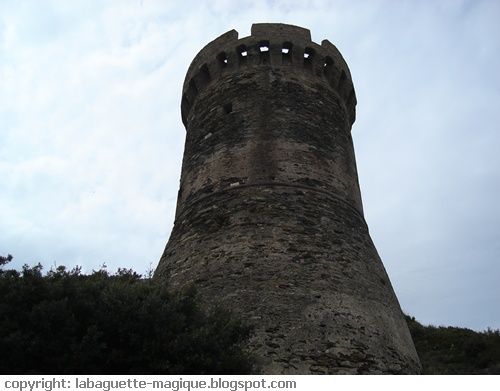
The relentless taming, shaping, claiming or reclaiming by man of most of the landscapes of Corsica helped sustain a pastoral and agricultural lifestyle, and testify the resilience of the local population, set against the influence of occupation, from successive waves of foreign rulers, invaders, friends or foes, and a spirit of protection against the dangers from the sea (the military towers that punctuate the coastline are a good illustration).


The (loosely-termed) Italian influence seems the most obvious one, but let us note more precisely Etruscan, Roman, Genoese, Tuscan influences, and remember that the island was even briefly under Neuhoff's rule (a German), and was also governed by English rule (1794-96). In passing, the ruined tower of Ste Marie (Santa Maria), at the Northern point of the Cape, is a result of Nelson's bombing it from sea!

Although I am familiar with only a small part of the island, namely the Northeastern part of the Cape, what I have witnessed here is a microcosm that encapsulates this pastoral and agricultural order, this organisational distribution of land. Although post-WWII modernity has brought more technological progress inland, it has also heralded the further erosion of the peasant/ fisherman society, echoing the decline seen elsewhere in Europe, and driven large expanses of cultivated land into fallow, before the inevitable shift: the land that once fed families and kept them on the island is progressively being turned into construction sites. When once upon a time a vineyard would have prospered on great grand-dad's piece of land, a house now stands, either built by our brave winemaker's descendants or by whichever family the descendants sold the land to.


In the sought-after areas of Costa Verde, Porto Vecchio, Calvi/ Lumio, and Ajaccio/ Propriano, construction on prime land has been more 'aggressive' as reflected by recent developments of hotels, shopping parades, apartment blocks, private or council housing estates, and villas, with promoters and end-consumers alike vying for that ultimate kick: the seaview, the exclusivity, the panorama, a snatch of your own private slice of paradise, from reasonable to hardly affordable... (to be continued)